World's first trillionaire predicted within a decade

22 Trần Quốc Toản, Phường Võ Thị Sáu, Quận 3, Tp.HCM
Tiêu điểm
BĐS: Bất động sản dẫn đầu thị trường trái phiếu VH & TG: harari Chiến Tranh Iran Ngày 34 Tiền Tệ : Nợ xấu 2026: Thách thức và giải pháp Tiền Tệ : Buffett Tích Tiền: Dấu Hiệu Kinh Tế CN & MT: Chuyên gia phương Tây thừa nhận: "Chúng ta sai lầm rồi", phải sao chép Trung Quốc ngay thôi kẻo quá muộn CN & MT: Siêu El Nino 2026 có thể mạnh nhất thế kỷ, Trái đất tiến tới mốc nhiệt nguy hiểm mới CN & MT: Gần 1.000.000 nhân viên công nghệ mất việc sau 6 năm vì AI: Cơn lốc sa thải càn quét Silicon Valley, kỷ nguyên 'kỳ lân 50 người' chính thức bắt đầu CN & MT: AI và Thất nghiệp: Thực trạng 2026-2035 BĐS: Bất Động Sản: Gánh Nặng Ngân Hàng BĐS: Dự báo 3 kịch bản cho thị trường bất động sản quý II CN & MT: Điện hạt nhân phục hưng giữa những bất ổn năng lượng toàn cầu CN & MT: Trung tâm năng lượng tích hợp: Bài toán chiến lược của Petrovietnam BĐS: Nhóm DN bất động sản chìm trong thua lỗ, 'trắng' doanh thu quý I CN & MT: Dông lốc, mưa đá còn xuất hiện nhiều và khốc liệt hơn do El Nino Tin tức: Kinh tế Việt Nam 2026: Nỗ lực tăng tốc và vùng nhiễu động Tin tức: Khoảng 109.000 doanh nghiệp đã rút lui khỏi thị trường trong 4 tháng đầu năm CN & MT: Dòng tiền ồ ạt đổ vào năng lượng sạch giữa khủng hoảng Trung Đông BĐS: Doanh nghiệp bất động sản chìm trong thua lỗ SK & Đời Sống: Hơn nửa lao động toàn cầu đang chán việc VH & TG: Thế giới lo cạn khí đốt, TQ đã "tính trước" 20 năm: Lời chỉ đạo của ông Tập Cận Bình và chiến dịch táo bạo Tin tức: Bài phát biểu chính sách đối ngoại Nhật Bản-Việt Nam VH & TG: Nước cờ Trump và ASEAN 2026 Tiền Tệ : Lạm phát cao, đơn hàng giảm Tiền Tệ : VIFC: dòng vốn không chỉ cần nơi đến mà cần nơi để ở lại Thư Giản: Đại Biến Động Thế Kỷ 21: Vận 9 Thư Giản: Con người trần gian và hành trình vũ trụ Thư Giản: [2020s: Một thập kỷ rung động] Thư Giản: Abhigya Anand và dự báo 2026 Thư Giản: Dự đoán Điểm kỳ dị các vị trí q3 SK & Đời Sống: Những dự báo về tương lai con người từ một thế kỷ trước Thư Giản: Gemini đã dự cảm khá rỏ dưới lăng kính của mac ngôn thé giới từ 2050. Nhưng từ 2010 ở... SK & Đời Sống: Phường có mật độ dân số cao nhất Việt Nam, gấp 12 lần Hồng Kông (Trung Quốc), 10 lần Singapore : Trật tự thế giới trước nghịch lý lớn của thời đại Chứng khoán: Đầu tư nội địa giữa bất ổn toàn cầu : Nếu không sửa luật, dự án bất động sản sẽ tắc trong 10 năm tới CN & MT: Chọn hybrid thay vì xe điện: Bước đi đẩy những gã khổng lồ ô tô Nhật Bản đến bờ vực sinh tồn? VH & TG: So sánh phát triển 200 năm trước Tin tức:  SIÊU CẢNG 5 TỶ USD CẦN GIỜ CHỐT NHÀ ĐẦU TƯ – “ÁT CHỦ BÀI” LOGISTICS CỦA VIỆT NAM LỘ DIỆN CN & MT: Giải mã nắng nóng 2026: Nếu siêu El Nino xảy ra, thời tiết Việt Nam chịu ảnh hưởng thế nào? Tin tức: Tăng trưởng hai con số, tăng quy mô giảm số lượng dự án Tin tức: Sức mạnh hãng tàu lớn nhất hành tinh vừa quyết đầu tư vào siêu cảng 128.872 tỷ đồng của Việt Nam: Doanh thu 86 tỷ Euro, nắm 20% năng lực vận tải toàn cầu VH & TG: Cuộc sống về già của thế hệ đầu tiên chọn 'không con cái' CN & MT: Trung Quốc: Chuyển đổi năng lượng toàn cầu then chốt CN & MT: Từ Mặt Đất Đến Sao Hỏa: Tương Lai Tin tức: 'Đừng cố giấu sai lầm cũ bằng cách tạo ra sai lầm mới' Tin tức: Đường Sắt Bắc-Nam: Logistics Tối Ưu Tin tức: Cụm cảng Cái Mép - Cần Giờ 2032 Tin tức: Chỉnh hướng kinh tế Việt Nam 2026 CN & MT: Pin lưu trữ năng lượng và yêu cầu tái cấu trúc hệ thống điện Việt Nam CN & MT: Từ những mái nhà phủ pin mặt trời đến bài toán 136 tỷ USD cho điện VH & TG: Nơi nóng nhất Trái Đất không phải xích đạo CN & MT: Phi hành đoàn Mặt Trăng vượt qua quả cầu lửa 3.000 độ C Tin tức: Đã tìm được nhà đầu tư cho dự án cảng Cần Giờ BĐS: Bất động sản TP.HCM: Thanh khoản "đóng băng" VH & TG: Những nghịch lý giá dầu VH & TG: Dự báo Chiến tranh Iran Quý 2/2026 BĐS: Dòng tiền lớn “vẽ lại bản đồ”, nhà đầu tư bất động sản buộc thay đổi cuộc chơi VH & TG: Cách tiếp cận của bạn về "nước cờ đôi" của ông Trump thực sự là một quan sát bậc thầy... VH & TG: Cuộc chiến Iran có ý nghĩa gì đối với Trung Quốc? CN & MT: 40% diện tích Đồng bằng sông Cửu Long sẽ ngập nếu nước biển dâng một mét CN & MT: 'Cục pin’ khổng lồ đầu tiên của hệ thống điện Việt Nam SK & Đời Sống: Tinh thần thời đại Z Thư Giản: Dự báo Xích Mã Hồng Dương 2026 CN & MT: Chiến lược không gian Mỹ và dự báo Brzezinski Tiền Tệ : Nợ xấu ngân hàng vượt 10 tỷ USD: Không phải BIDV hay VPBank, đây mới là nhà băng có nhiều nợ xấu nhất Tiền Tệ : Mỗi ngày vay hơn 2.600 tỷ đồng: Áp lực và lộ trình trả nợ công của Việt Nam ra sao trong năm 2026? CN & MT: Tương lai Đại dương và Hồi phục Sinh thái Thư Giản: Địa Chính Trị và Dịch Lý: Vận Thế Thư Giản: Bính Ngọ 2026: Điểm Gãy Lịch Sử SK & Đời Sống: Việt Nam đối mặt địa chấn kinh tế SK & Đời Sống: Di dân: Sức khỏe, chất lượng sống, tái định nghĩa BĐS: 3 “ông lớn” chia thị phần bất động sản TP.HCM năm Bính Ngọ: Vinhomes làm siêu dự án ngoại ô, Masterise tiếp tục giữ trung tâm, Sun Group đánh thức vùng ven sông SK & Đời Sống: Bùng nổ các đại đô thị Tiền Tệ : Phân tích hệ thống ngân hàng Việt Nam 2026 SK & Đời Sống: Tái cấu trúc KCN Việt Nam quanh cảng Tiền Tệ : Chân dung người được chọn vào ghế Chủ tịch Fed: 35 tuổi đã vào Hội đồng Thống đốc, nổi tiếng với lập trường cứng rắn về nới lỏng tiền tệ Tiền Tệ : Luật Tiền Mới: Thanh Lọc Hay Sụp Đổ? SK & Đời Sống: Cô đơn: Xu hướng xã hội Việt Nam BĐS: Mặt bằng trung tâm TP.HCM: Thực trạng và dự báo VH & TG: Chiến lược An ninh Quốc gia Mỹ: Răn đe Trung Quốc Chứng khoán: 150 nhà đầu tư toàn cầu đến Việt Nam tìm cơ hội "giải ngân" VH & TG: Nhật Bản cân nhắc vũ khí hạt nhân Chứng khoán: PHẦN 3: THỊ TRƯỜNG THĂNG HOA XUẤT TƯỚNG NHỮNG 'ANH HÙNG' Chứng khoán: VN-Index mất gần 30 điểm Chứng khoán: Mía đường Cao Bằng (CBS) chốt quyền trả cổ tức bằng tiền tỷ lệ 30% Chứng khoán: CHỨNG KHOÁN QUÝ 4.2025 Kì 2 BĐS: Không đánh đổi giá nhà lấy tăng trưởng viển vông! BĐS: Thực trạng phân khúc nhà liền thổ tại TPHCM BĐS: 5 lưu ý khi đầu tư LƯỚT SÓNG bất động sản BĐS: Đất ở ổn định 20 năm, không có khiếu kiện, tranh chấp có được cấp sổ đỏ hay không BĐS: Hơn 32.000 căn nhà ở xã hội gần TP.HCM trong kế hoạch xây dựng năm 2025 của Long An
Bài viết
World's first trillionaire predicted within a decade

    The world's first trillionaire is predicted by UK charity Oxfam to happen within the next 10 years. Meanwhile, the global eradication of poverty will take until the mid-23rd century to achieve.

    worlds first trillionaire predicted within a decade

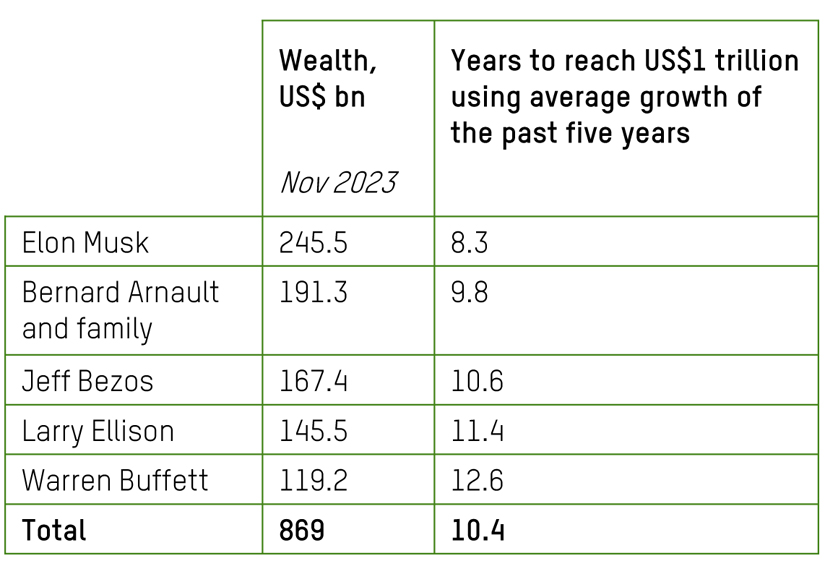
    The rich are becoming richer at an even faster rate than previously thought. The world's five wealthiest people have more than doubled their fortunes from a combined $405 billion to $869 billion since 2020 – at a rate of $14 million per hour – while nearly five billion people have been made poorer. That is according to a new Oxfam report on inequality and global corporate power. If current trends continue, the world will have its first trillionaire within a decade but poverty (defined as earning less than $7/day) will take another 229 years to be eradicated worldwide.

    The report, "Inequality Inc.", is published as business elites gather for this year's World Economic Forum (WEF) meeting in Davos, Switzerland. It reveals that seven out of ten of the world's biggest corporations have a billionaire as CEO or principal shareholder. These corporations are worth $10.2 trillion, equivalent to more than the combined GDPs of all countries in Africa and Latin America.

    "We're witnessing the beginnings of a decade of division, with billions of people shouldering the economic shockwaves of pandemic, inflation and war, while billionaires' fortunes boom," said Amitabh Behar, Oxfam International interim Executive Director. "This inequality is no accident; the billionaire class is ensuring corporations deliver more wealth to them at the expense of everyone else."

    "Runaway corporate and monopoly power is an inequality-generating machine," he continued. "Through squeezing workers, dodging tax, privatising the state and spurring climate breakdown, corporations are funnelling endless wealth to their ultra-rich owners. But they're also funnelling power, undermining our democracies and our rights. No corporation or individual should have this much power over our economies and our lives – to be clear, nobody should have a billion dollars."

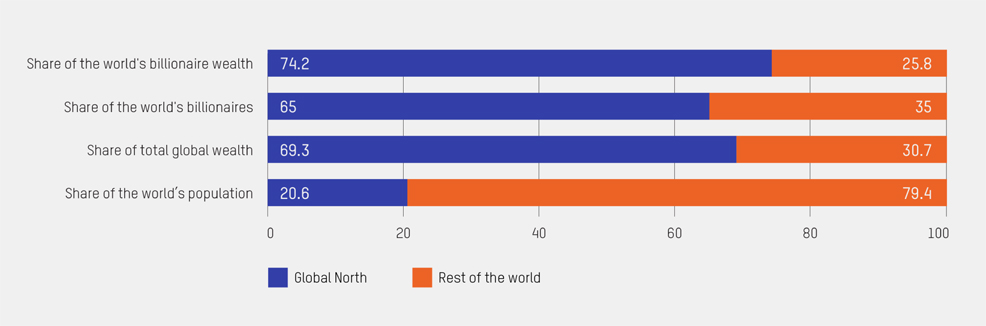
    The past three years' surge in extreme wealth has solidified, while global poverty remains mired at pre-pandemic levels. Billionaires are now $3.3 trillion richer than in 2020, and their wealth has grown at triple the rate of inflation. Despite representing just 21% of the global population, rich countries in the Global North own 69% of global wealth and are home to 74% of the world's billionaire wealth.
    share of global wealth

    Mirroring the fortunes of the super-rich, large firms are set to smash their annual profit records in 2023. 148 of the world's biggest corporations together raked in $1.8 trillion in total net profits in the year to June 2023, a 52% jump compared to 2018–2021. Their windfall profits surged to nearly $700 billion. Oxfam's report finds that for every $100 of profit made by 96 major corporations between July 2022 and June 2023, $82 was paid out to rich shareholders.

    Some of the more notable billionaires are highlighted by Inequality Inc.:

    • Bernard Arnault (net worth: US$191.3bn) is the world's second richest man. He presides over the luxury goods empire LVMH, which has been fined by France's anti-trust body for anti-competitive practices. He also owns France's biggest media outlet, Les Échos, as well as Le Parisien.

    • Jeff Bezos (net worth: US$167.4bn) has increased his fortune by $32.7 billion since 2020. The US government has sued Amazon for wielding its "monopoly power" to hike prices, degrade service for shoppers and stifle competition.

    • Aliko Dangote (net worth: US$10.5bn) is Africa's richest person. He holds a "near-monopoly" on cement in Nigeria, and his empire's expansion into oil has raised concerns about a new private monopoly.

    Meanwhile, the wages of 800 million workers have failed to keep up with inflation and they have lost $1.5 trillion over the last two years, equivalent to nearly a month (25 days) of lost wages for each worker.

    Oxfam's analysis of data from 1,600 of the largest corporations worldwide shows that 0.4% of them are publicly committed to paying workers a living wage and support a living wage in their value chains. It would take 1,200 years for a woman working in the health and social sector to earn what the average CEO in the biggest Fortune 100 companies earns in a year.
    first trillionaire future timeline

    Oxfam's report also shows how a "war on taxation" by corporations has seen their effective tax rate fall by one-third in recent decades, while corporations have relentlessly privatised the public sector and segregated services like education and water.

    "We have the evidence. We know the history. Public power can rein in runaway corporate power and inequality – shaping the market to be fairer and free from billionaire control. Governments must intervene to break up monopolies, empower workers, tax these massive corporate profits and, crucially, invest in a new era of public goods and services," said Behar.

    "Every corporation has a responsibility to act but very few are. Governments must step up. There is action that lawmakers can learn from, from US anti-monopoly government enforcers suing Amazon in a landmark case, to the European Commission wanting Google to break up its online advertising business, and Africa's historic fight to reshape international tax rules."

    Oxfam is calling on governments to rapidly and radically reduce the gap between the super-rich and the rest of society by:

    • Revitalising the state. A dynamic and effective state is the best bulwark against extreme corporate power. Governments should ensure the universal provision of healthcare and education, and explore publicly-delivered goods and public options in sectors from energy to transportation.

    • Reining in corporate power, including by breaking up monopolies and democratising patent rules. This also means legislating for living wages, capping CEO pay, and new taxes on the super-rich and corporations, including permanent wealth and excess profit taxes. Oxfam estimates that a wealth tax on the world's millionaires and billionaires could generate $1.8 trillion a year.

    • Reinventing business. Competitive and profitable businesses don't have to be shackled by shareholder greed. Democratically-owned businesses better equalise the proceeds of business. If just 10% of US businesses were employee-owned, this could double the wealth share of the poorest half of the US population, including doubling the average wealth of Black households.

    By FutureTimeLine
    THỐNG KÊ TRUY CẬP
    • Đang online 5
    • Truy cập tuần 311
    • Truy cập tháng 6671
    • Tổng truy cập 665851