Most architects look to control nature; Kongjian Yu wants it to take over.
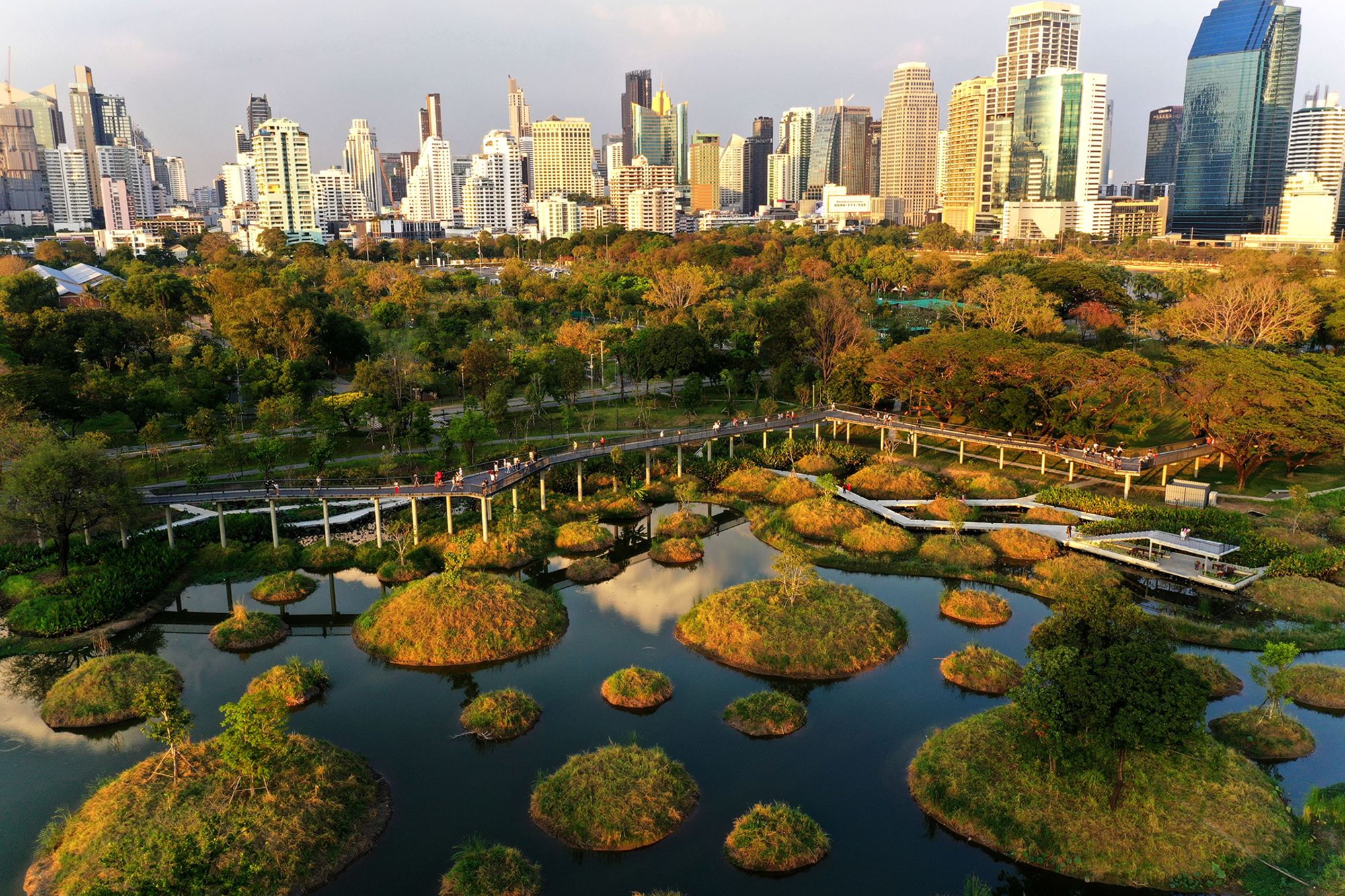
In Bangkok, Turenscape, alongside the Thai military and local firm Arsomsilp Community and Environmental Architect, transformed the concrete ground of a former tobacco factory into a man-made wetland with mini islands. Turenscape/Courtesy The Cultural Landscape Foundation
Intense storms are on the rise and cities across the world are finding it difficult to cope with deluges of floodwater. But instead of using high-tech, concrete-based engineering solutions to defend against the vagaries of the climate crisis, the Chinese landscape architect and urban planner lets nature do the work.
For over a decade, Yu and his firm Turenscape have designed nature-based “sponge cities” intended to soak up and retain stormwater before releasing it back into the environment. Varied in form and scale, the projects create new parks, restore wetlands and install rain gardens and permeable pavements, among much else.
The problem with concrete- or pipe-based solutions that funnel water away from flooded areas is that they are expensive, lack flexibility and require constant maintenance, Yu said. They may also, counterintuitively, make places more “sensitive or vulnerable” to flooding, he argued, comparing cities that rely on conventional flood mitigation to a person whose veins and arteries have hardened. Just as reduced blood flow causes heart attacks, blockages and overflows in urban drainage systems can have devastating knock-on effects.
“There’s a misconception that if we can build a flood wall higher and higher, or if we build the dams higher and stronger, (then) we can protect a city from flooding,” Yu told CNN in a video call. “(We think) we can control the water… that is a mistake.”
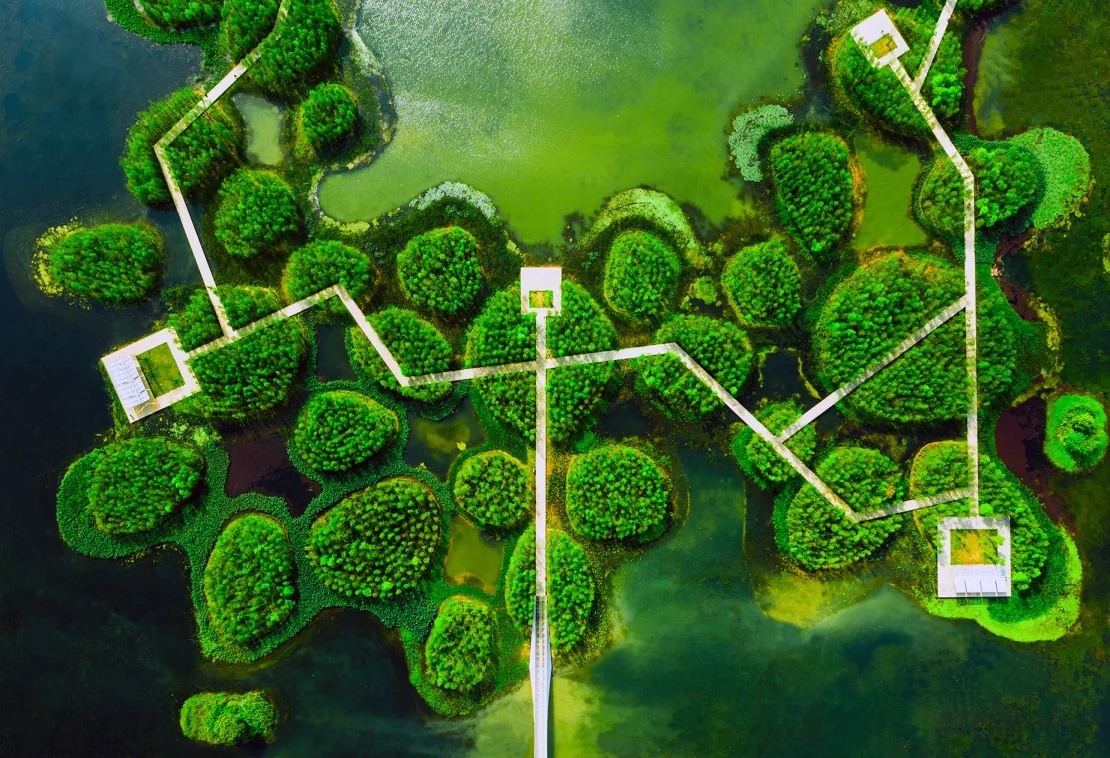
The Nanchang Fish Tail Park, in China's Jiangxi province, saw Turenscape transform a polluted former fish farm and coal ash dump site into a 126-acre "floating forest." Small islands with dawn redwoods and two types of cypress help regulate storm water and provide a habitat for wildlife. Turenscape/Courtesy The Cultural Landscape Foundation
Yu’s proposal is this: Create areas with porous earth where local plants can thrive with little or no maintenance. If it rains, the earth and plants soak up the water and prevent some (or even all) of it from flooding nearby areas. Any excess water that is not absorbed will at least be slowed by the vegetation — unlike concrete, which can instead dangerously speed up water flow, Yu said.
Turenscape has planned and designed over 10,000 of these projects in more than 250 cities across the globe, completing over 1,000 of them. Many are found in mainland China, where more than 70 cities have implemented sponge city initiatives (not all are by Turenscape, as some local governments have used other firms) since the country incorporated the idea into national urban planning policy in 2015.
Floods present a growing problem in China, with Chinese leader Xi Jinping calling the task of controlling them “increasingly arduous” in late June. According to a 2021 World Bank report, 641 of China’s 654 largest cities face regular flooding. This has partly been attributed to rapid urban development, which has created sprawl that encases floodplains in impermeable concrete.
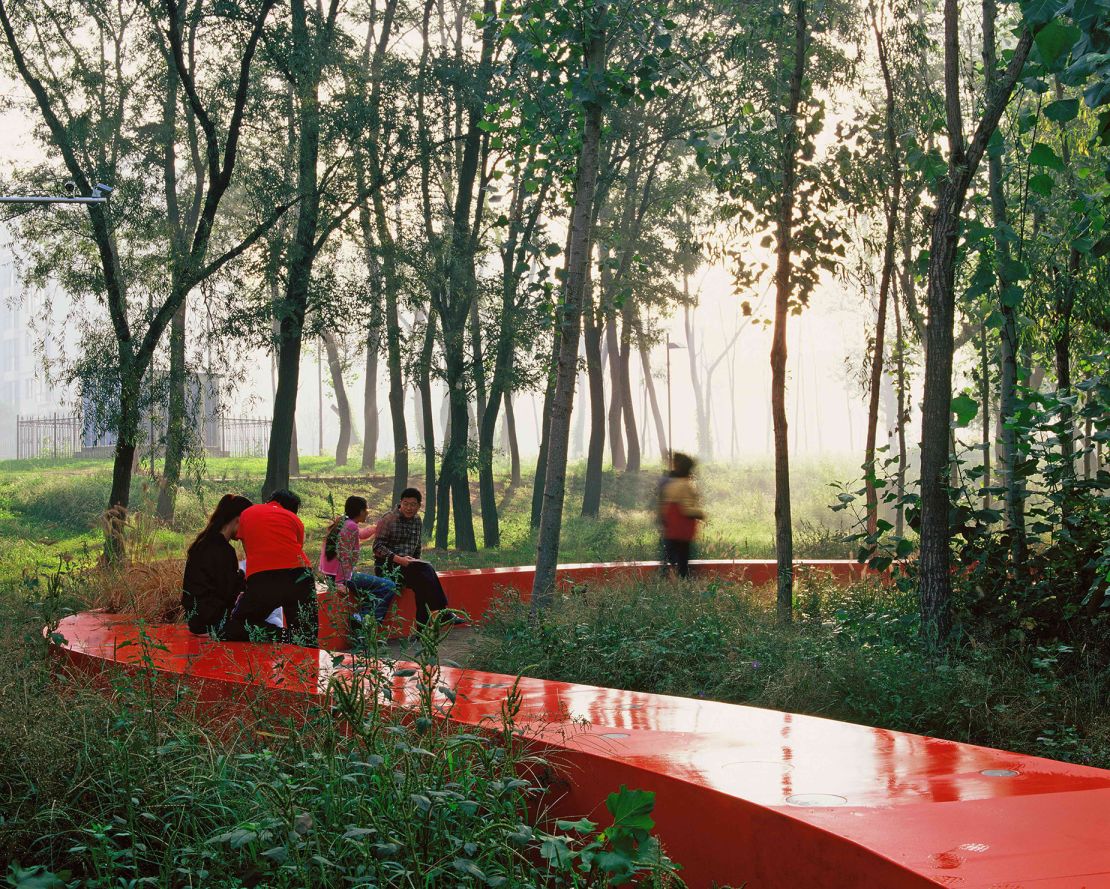
Visitors walk through Red Ribbon Park in Qinghuandao, in China's Hebei province. Turenscape/Courtesy The Cultural Landscape Foundation
China’s vulnerability to flooding has been thrown in stark relief this summer. In June, southern parts of the country were hit by flash floods and deadly landslides following torrential rain, with tens of thousands of people evacuated. Last month, similar devastation played out across China’s heartlands as multiple provinces declared emergency alerts and dozens of people were killed amid scenes of deadly bridge collapses, cities submerged in water and emergency responders in speedboats racing to rescue stranded residents.
But whether this latest flooding crisis demonstrates the limitations of China’s sponge cities, or supports the case to expand them, is a matter of debate.
Cities ‘not spongy enough’
Yu wants cities to move away from the grand infrastructure solutions often favored by governments and construction companies, and towards smaller-scale alternatives. They may be cheaper, too: The sponge city program in Wuhan, for example, cost more than 4 billion yuan ($550 million) less than a concrete-based approach, according to a policy brief by the UK’s University of Leeds.
A successful sponge city should be designed with location in mind, considering factors like topography, rainfall patterns and the kinds of plants that would thrive there, as well as the needs of the community. It’s a tailored and holistic approach, rather than one-size-fits-all.
In China’s tropical island province of Hainan, for instance, Turenscape transformed an old concrete sea wall, a barren fish farm and a nearby brownfield site into a “breathing sea wall” that absorbs the force of the ocean and acts as a buffer against flooding for a nearby commercial district.
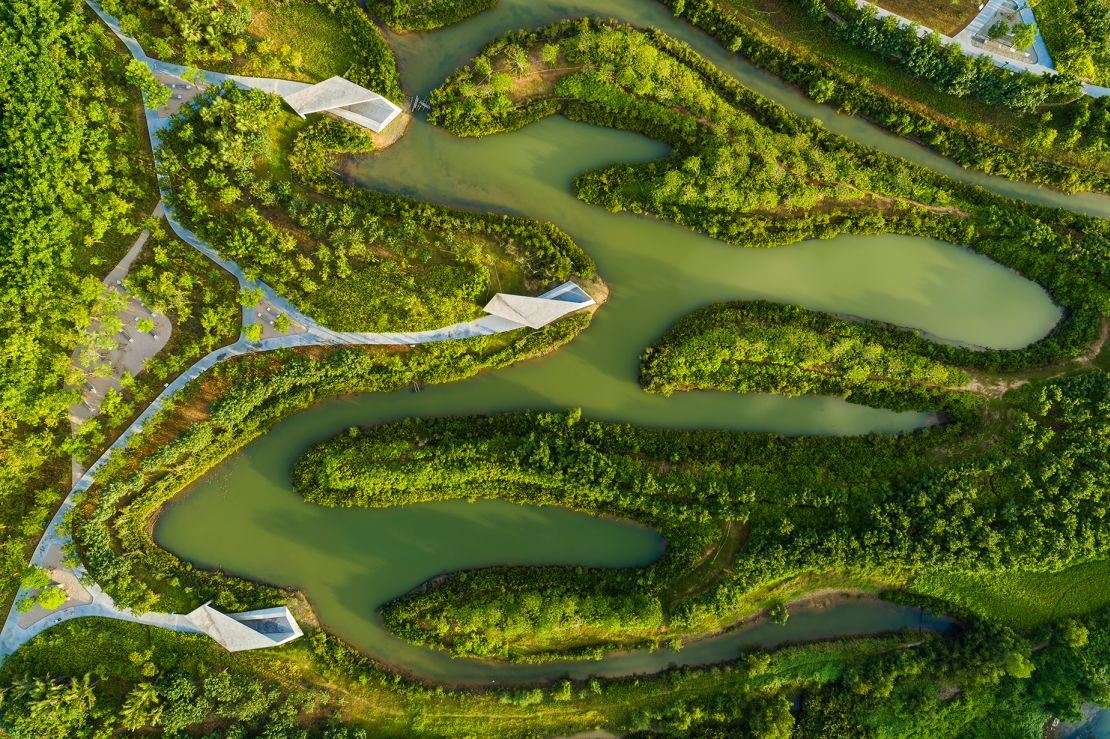
A birds-eye view of the Sanya Mangrove Park in China's island province, Hainan. Turenscape/Courtesy The Cultural Landscape Foundation
The sea wall was reshaped to accommodate terraced planters, while the fish farm’s ponds and dikes were turned into a mangrove habitat. Inland, porous green space helps slow the flow of water and absorb storm surges. It has withstood several tropical storms over the past two years, according to Turenscape.
Research carried out by Yu and his firm estimates that if 20% to 30% of a city’s land is given to sponge projects, it would be virtually safe from flooding. (However, if surrounding areas also flood, it may still be difficult for the sites to absorb all the excess water.) The firm has also said that one hectare (2.47 acres) of sponge land can naturally clean 800 tons of polluted water to the point that it is safe enough to swim in.
Yet, some experts have suggested that sponge city infrastructure struggles to cope when rain exceeds 200 millimeters (7.9 inches) a day. For example, Meizhou, in Guangdong, has been designated a sponge city but experienced some of the summer’s most severe flooding after heavy rains that saw one town experience 369.3 millimeters (14.5 inches) of rain in a single day, according to the Chinese state media outlet Global Times. (Turenscape did not create any of the sponge projects in the city.)
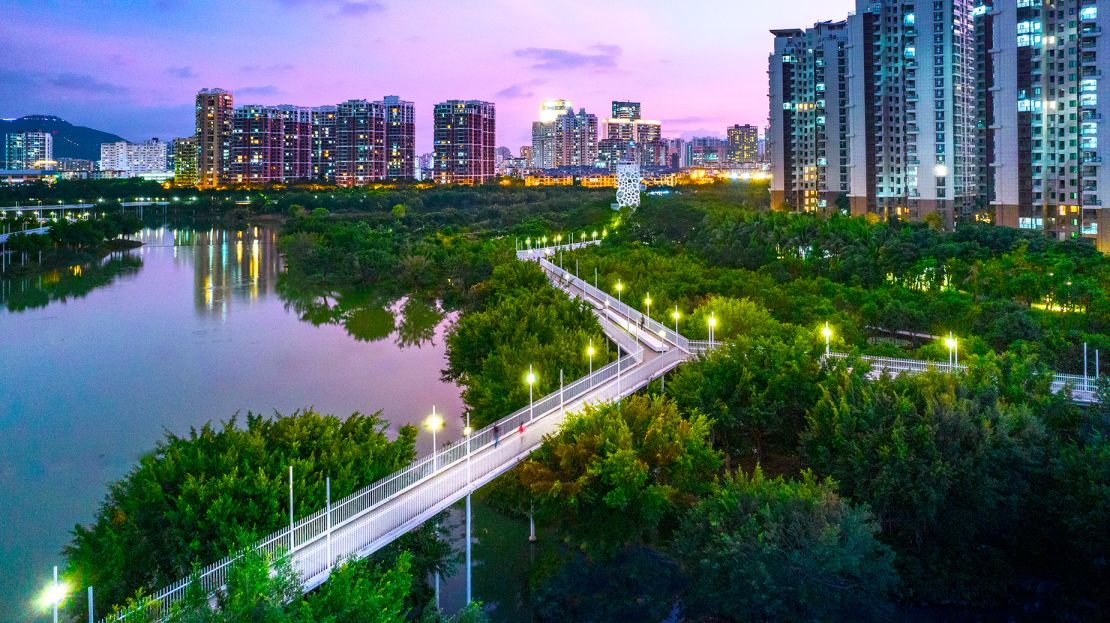
The Dong'an Wetland Park, another Turescape project in Sanya. Turenscape/Courtesy The Cultural Landscape Foundation
Speaking to CNN last month, Faith Chan, professor of geographical sciences at the University of Nottingham Ningbo China, said that sponge city programs in China can typically “alleviate or reduce” the impact of medium or even large amounts of rainfall, but they are “not for extreme rain.” Sponge infrastructure must be supplemented with “hard engineering,” like dams and embankments, to tackle the heaviest rains, he continued, adding: “We need both measures to improve (cities’) resilience. We can’t just rely on one.”
When asked whether recent flooding undermined his thesis, Yu acknowledged that sponge cities can still overflow if projects aren’t properly designed or built, or if rainfall is too extreme. But he argued that flooding occurs in places that “are not spongy enough,” adding: “(They) just need more sponge (projects) to make the city more resilient.”
More than flood prevention
Beyond flood mitigation, sponge cities may offer other environmental benefits. Chan said that sponge parks could help reduce urban temperatures and address water shortages, as well as providing pleasant environments for residents.
“The government wants to restore the environment and… (improve) urban ecology,” he said. “But not just that — they want to … collect rain and use it, because water is very scarce in the city.”
In Wuhan, where more than 380 sponge projects — including urban gardens, parks and green spaces — absorb and divert rain water to artificial lakes, local air quality and biodiversity were found to have improved since they were constructed. Lower temperatures were also recorded at the city’s Yangtze River Beach Park, where 45,000 trees and other vegetation sequester an estimated 724 tonnes of carbon per year.
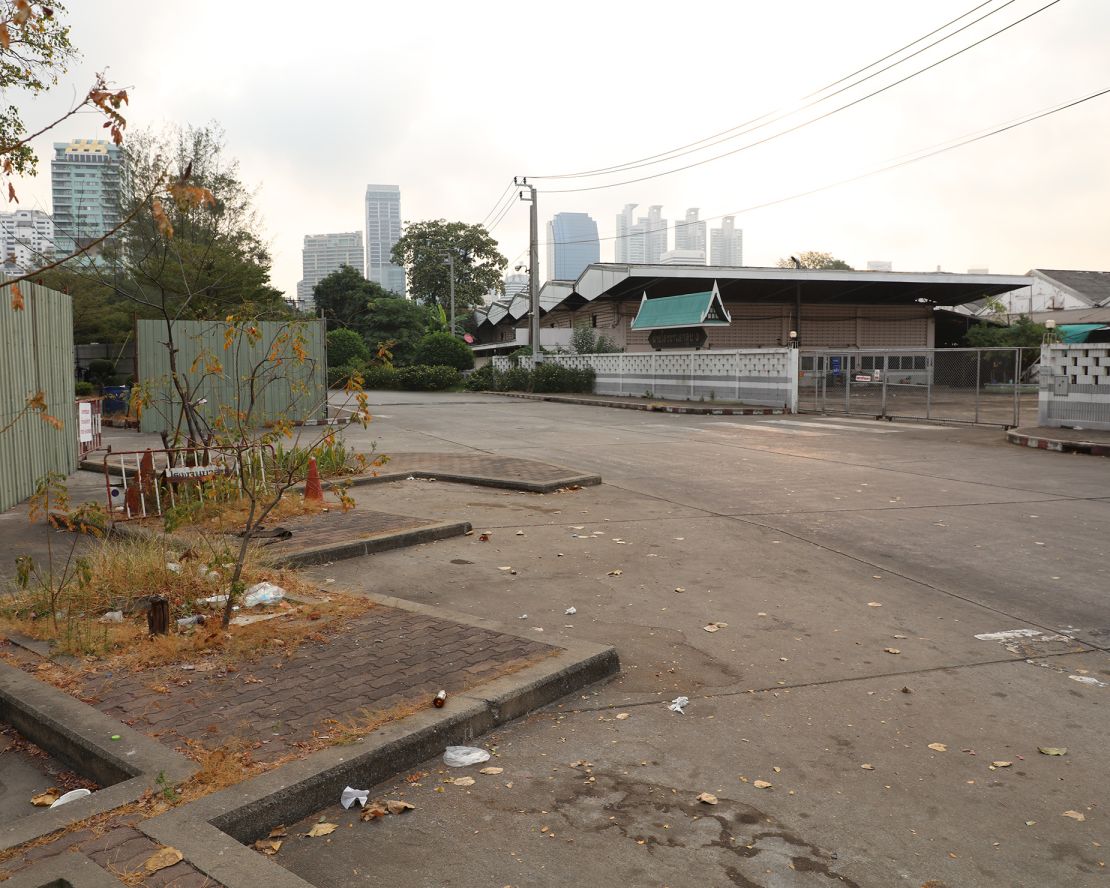
The Benjakitti Forest Park in Bangkok was built on the site of an old tobacco factory. The land was tilled to turn the hard clay surface soil into a wet and spongy habitat that needs little irrigation or maintenance during the dry season. Turenscape/Courtesy The Cultural Landscape Foundation
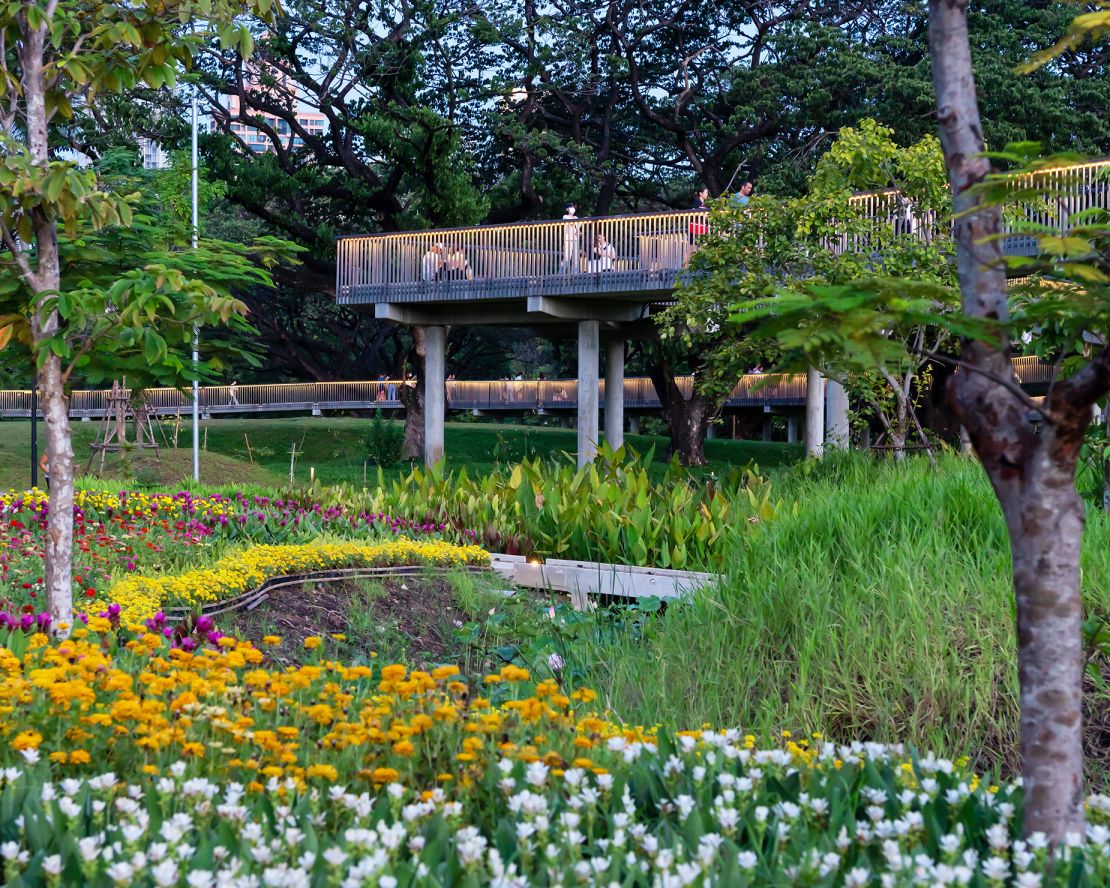
Turenscape planted 5,600 seedlings of 360 local species, including rare trees indigenous to Thailand’s central river basin. By creating an environment where local plants can thrive, Turenscape hopes that nature will then decide where plants should best take root. Turenscape/Courtesy The Cultural Landscape Foundation
This may be another reason Yu’s services have been sought outside China. In Bangkok, Turenscape transformed the concrete ground of a former tobacco factory into a man-made wetland with mini islands. Competed in 2022, the Benjakitti Forest Park (which was designed alongside the Thai military and local firm Arsomsilp Community and Environmental Architect) can not only soak up an estimated 23 million gallons of stormwater from the surrounding areas during the rainy season — it has also become a popular spot for tourists and locals alike.
Last year, The Cultural Landscape Foundation awarded Yu the $100,000 Oberlander Prize in recognition of his pioneering work.
“He was one of the very first people, (and Turenscape) one of the first practices, to really work with these ideas that we have to understand and harness natural processes and make landscapes that do (the) work, like cleaning water, mitigating floods, reducing urban temperature or stabilizing fragile soils,” Elizabeth Mossop, chair of the prize’s jury and dean of the University of Technology Sydney’s School of Design, Architecture and Building.
She added that Yu’s work stands apart from that of his contemporaries because of the sheer scale of his projects and the change he has been able to affect.
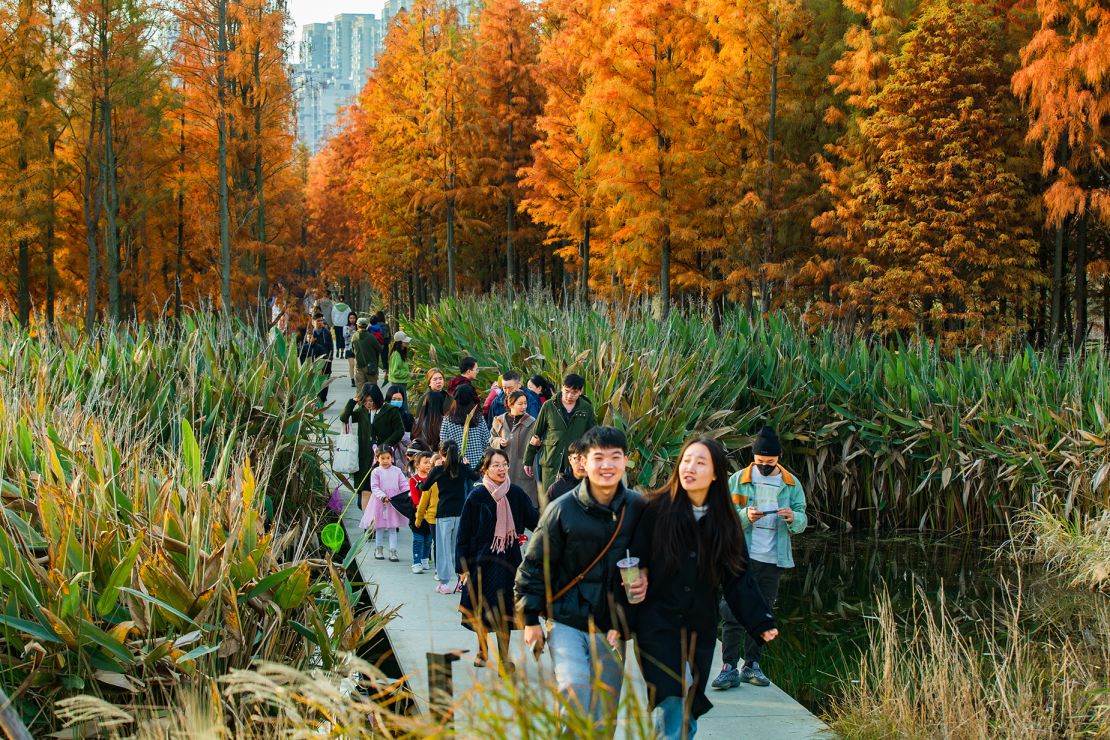
A walkway leads visitors through the Nanchang Fish Tail Park. Turenscape/Courtesy The Cultural Landscape Foundation
“The threats and the impact of climate change, and the experience of climate uncertainty is absolutely on top of us right now,” Mossop said. “We actually do know how to do a lot of these things, we do have that kind of data. We are being slowed down by political and social and cultural processes.”
Like Yu, she suggested that sponge cities’ shortcoming is that they are not, yet, far-reaching enough.
“I think the frustration is that we feel like we have the answers… If these ideas could be adopted more widely, they would go a long way to addressing many of the current threats.”
CNN’s Simone McCarthy, Hassan Tayir, Oscar Holland and Fred He contributed to this report.
By Christy Choi, CNN