In a recent article, I wrote that the war in Ukraine is over, but nobody knows how to end it. What I meant by that was that the general outline of the military aspects of the war is locked in, and the conflict is contained. The war was started by the Russians, who wanted to take control of Ukraine to create a buffer zone that would prevent the United States and Ukraine from threatening Russia. The United States intervened by sending weapons to Ukraine to block a Russian advance that could threaten NATO and Western Europe. The Ukrainians wanted to block the Russians from taking any territory from their homeland.
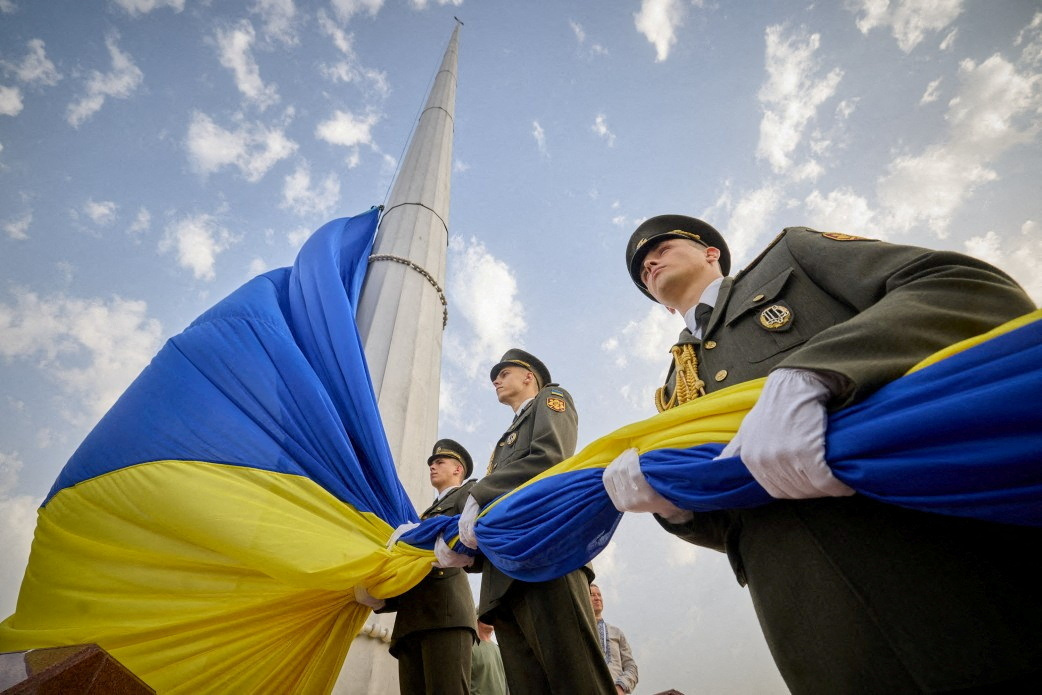
The war was part of a series of defensive moves by Russia, the United States and Ukraine, with each more offensive and dangerous than the last. The Russian thrust failed to break the Ukrainians and the Americans. Their defensive capabilities, coupled with their fear of defeat, blunted the Russian advance. The Russians’ fear prevented them from abandoning their constant efforts to disrupt the defenses.
The Russians are not, in my opinion, breaking their enemies. At the same time, the Ukrainians will not be able to break the Russians, in part because the improbability of success will limit any attack, and because the United States, having succeeded in blocking threats to its interest, has little will to sustain the battle. This would seem to impose the endgame on all sides, but the matter is more complex.
Any settlement not emanating from the total defeat of one side would have to address the root cause of the war, which was Russia’s fear of a future attack. Russia would have to be induced to a deal by both the realization of the improbability of military success and some reduction of its sense of vulnerability via the annexation of a significant part of Ukraine, but far from all of it. The problem for Ukraine is that such a settlement could serve merely as an interlude until Russia refreshes its force and resumes the attack. Ukraine cannot be certain of U.S. military support at a later date and therefore would face a difficult military situation.
In a war that ends without the total defeat of one side, the fear is that any settlement would simply be a prelude to a renewed conflict and defeat down the road. The Russian view would be that any cession of land would be insufficient. The Ukrainians fear that the cession of land would make Russia far more dangerous, and the Americans would be afraid of endless war causing domestic resistance and vulnerability to other threats.
In examining what appears to be a hopeless situation, we need to consider Russia’s non-military needs. The Soviet Union was impoverished, and its military position was not as strong as many thought. Its fall left Russia in a similar position. There was no radical solution. Russia needs to rectify this situation at a time when its military weakness is even clearer. For Russia, turning itself into a nation that is in the first rank economically is fundamental. Using military force to achieve this hasn’t worked.
The United States faces a choice between ongoing war or effectively capitulating to Russia. Russia’s fear of attack coincides with the reality that the United States intends to cripple Russia economically. In supporting Ukraine, that is clearly Washington’s intent, but before the war, the U.S. approach was more like indifference. After World War II, the United States took an almost economic track toward its former enemies. Rather than breaking the Japanese and German nations, something that would have been quite rational, the United States undertook programs of reconstruction, enabling both Japan and West Germany to emerge as world-leading economic powers.
The Americans understood after the treatment of Germany following World War I that trying to crush a nation could cost the United States and the world a great deal, whereas rehabilitating the defeated helped to avoid wars of revenge while enhancing the global economic system. It also opened the door to military and political alliances. West Germany joined NATO, and Japan became a long-term American ally.
I have tried to show that the war has ended – in the sense that no one is in a position to achieve their goal – but that a peace settlement that sustains itself is extremely difficult. If the United States follows the World War II model in which, rather than demanding surrender, which is not possible for Moscow, it focuses on a relationship based on rebuilding rather than destroying Russia, it might withdraw from a war that is over, while the Russians might pursue their economic interest: developing an economy that places them in the top rank of nations.
Russia is filled with valuable natural resources, a workforce that requires training and an industrial plant that needs rebuilding. This would not be a government project beyond some encouragement, but an investment opportunity. The U.S. government did not create Toyota or Daimler-Benz. The strategy humanized barbaric enemies.
I am not by any means a pacifist, nor am I given to heartwarming fantasies. What I am doing is facing the fact that the United States is involved in a war that will not yield to common sense because of the reasonable fears of all sides. And I am reaching back to the lessons of World War II and how the U.S. treated its defeated enemies. Russia is not defeated and has the power to continue the war, even if it does not win. This is not in America’s interest, but turning Russia from an insecure enemy to an investment opportunity would be. And, of course, U.S. troops would remain in Europe for now, if needed.
There is nothing idealistic in this. It is simply the way American wars tend to end. Therefore, it is intended as a solution in the national interest. Whether it will be followed or anyone will agree is uncertain, but the question is: How many years is a war in gridlock worth?
By George Friedman