Spheres of influence re-emerge from the crumbling liberal world order.
Ibrahim Rayintakath for Noema Magazine
The rules-based liberal international order, underwritten and guaranteed for decades by American might, has been consigned to the ashcan of history by the summary defection of its founding architect from its terms and premises.
After only one month in power, Team Trump has fundamentally broken ranks with the long-standing orthodoxy of the Washington establishment on almost every front. Where free trade was once gospel, now it is tariffs. Europeans are considered valuable allies only if they can pay for their own defense, share the ideological disposition of the administration and open their over-regulated markets to make way for the digital dominance of American Big Tech.
Instead of expressing outrage at China’s plans to take Taiwan, Russia’s bloody attempt to seize Ukraine or Israel’s vision of annexing the West Bank, Team Trump is openly considering its own Anschluss of other people’s territory in Greenland, the Panama Canal and even Canada. From what we can tell so far, the president’s idea of any peaceful settlement to these conflicts entails giving the stronger power what it wants.
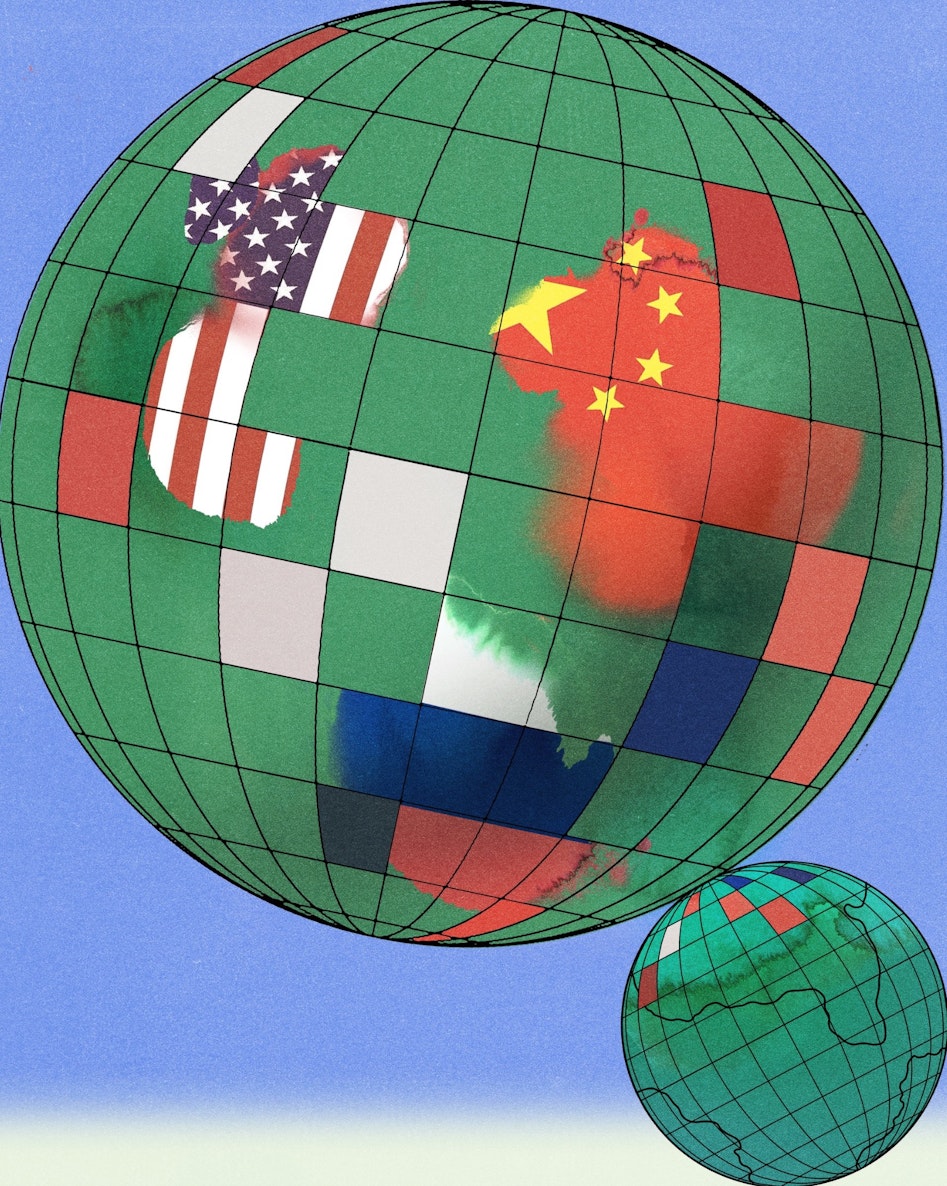
That the U.S. has now joined the other revisionist powers of China and Russia by baldly asserting sovereigntist self-interest unencumbered by the rules of others portends a world not unlike the 19th century when the great powers carved out exclusive domains of influence.
This is the prospect ahead envisaged by both historian Niall Ferguson and political theorist Francis Fukuyama in conversations last week. In his provocative way, Ferguson maintains that the liberal world order was, in any case, largely a fiction disguising the raw power of the American empire. Trump has only shed the garments that dressed it up and taken the gloves off. Fukuyama acknowledges that, for now, history not only didn’t end in liberal universalism after the Cold War in 1989, as he had hoped, but it has reverted to the way power was arranged in the world a century earlier.
What comes to both of their minds with respect to the U.S. is a return to the policies of William McKinley, the president from 1897 to 1901 whom Trump so admires. Like Trump, McKinley unilaterally declared reciprocal tariffs with all trading partners, earning him the moniker of “the Napoleon of Protection.” Further, he initiated the Spanish-American war to rid Cuba of Spanish rule and influence in the near hemisphere, ultimately settling the conflict by taking Puerto Rico and the Philippines as territorial protectorates. He also annexed Hawaii to project American power into the Pacific and pressed Imperial China to open its doors to trade with Western powers.
Global Weimar Or Modus Vivendi?
A world of sovereigntist great powers does not constitute an international order. Rather, it is a collage of self-contained entities not unlike the city-states of Europe in medieval times — none strong enough on its own to dominate the others.
Referring to the instability of inter-war Germany, the astute travel writer and geopolitical observer Robert Kaplan sees in this situation a “global Weimar” of perennial chaos and conflict resulting from the vacuum of any hegemonic authority or concert of powers capable of keeping the peace.
Writing in 1950, the conservative German jurist Carl Schmitt similarly envisioned the emergence of several power centers with no commanding core but viewed it differently: If roughly equivalent in their capacities, a stable modus vivendi could be established among them as long as they kept out of each other’s business.
As he saw it, in each epoch, the powerful devise rules over how land, sea and technology are “appropriated, divided and cultivated,” each forming a “force field of human power and activity.” He labeled this force-field Grossraum, or “great space,” bound together by the “spirit of laws,” or “nomos,” manifested in the distinct particularisms of moral taste, style of life, form of government and, with the future in mind, I might add, AI platforms.
In Schmitt’s scenario, “several independent Grossraum could constitute a balance among each other if they are ‘differentiated meaningfully and are homogenous internally.’”
The obvious great powers and their spheres of influence that would constitute a world apportioned in this way are China, America, Russia/Eurasia and India. Whether Europe falls de facto within the American sphere or not depends on its capacity to cohere as a continental entity.
“A world of sovereigntist great powers does not constitute an international order. Rather, it is a collage of self-contained entities.”
Clash Of Civilizational States
Meaningful differentiation and internal unity of the new sovereign zones could well be consolidated in the decades ahead by an intensifying clash of civilizations. The authorities in China and Russia have lately identified their countries as “civilizational states” to legitimate their power through historical continuity, setting themselves as distinct and apart from the universalist claims of the now fracturing Western-led order. In turn, this has prompted a rising sentiment in the West — already stoked by 9/11 and ongoing terrorist acts in Europe — that it too must be seen in civilizational terms The assertion of incommensurate values by others entails a reaffirmation of one’s own.
Hungary’s Viktor Orban, Elon Musk and Italy’s Giorgia Meloni, for example, all speak about the need to boost native family formation vis-a-vis immigrants and defend “Western civilization,” which the Italian prime minister defines as rooted in “Greek philosophy, Roman Law and Christian humanism.”
This week, Palantir CEO Alex Karp published a book titled “The Technological Republic: Hard Power, Soft Beliefs and the Future of the West,” in which he argues that the West can only survive if America dominates the technological frontier and applies that prowess militarily to ward off challengers. He calls on Silicon Valley to stop wasting its talents on the frivolous diversions of “late capitalism,” drop its squishy qualms about fortifying the armed might of the U.S. and get with the moral clarity required to remain a free people.
“Civilization,” of course, is an indeterminate concept with cross-cutting internal cleavages that defy any easy classification, as Fukuyama pointed out in our conversation. For some, “the West” means the Enlightenment and liberal norms of an open society. For others, traditional values from the Christian lineage stand at its core.
In Europe that cleavage cuts yet another way still: Though sympathetic to the Trumpist cultural outlook, traditionalist constituencies will politically resist their nations becoming vassals of America. At the same time, these same constituencies appear sympathetic to Putin’s culturally conservative views on family, religion and LGBTQ issues.
What is notable in America at this historical moment is that the most militant sovereigntists, such as U.S. Vice-President JD Vance, Defense Secretary Peter Hegseth and Russell Vought, the new director of the Office of Budget and Management, all prominently wear and promote their Christian identity as part and parcel of the Trump revolution. For them, Making America Great Again means making it Christian again.
“We’ve been down this path before and know how it led to world wars that the global rules-based order, for all its well-known neoliberal faults, was meant to avoid repeating.”
In Charted Territory
Since the future appears to be taking us back to the 19th century, one cannot say we are in “uncharted territory.” On the contrary, we’ve been down this path before and know how it led to world wars that the global rules-based order, for all its well-known neoliberal faults, was meant to avoid repeating.
Unfortunately, as Fukuyama laments, the historical memory of nations tends to be generational. Lessons once learned are later forgotten as the years go by and experiential memories drop like leaves.
Ferguson muses that, in retrospect, historians may well regard the years we are currently living through as an “inter-war” period that began after 1945, continued through two cold confrontations with the West, one with the Soviets and the other presently with China, and has not yet reached its endpoint.
In his estimation, we are at a critical juncture where China is approaching peak power while America is so intractably polarized within that it resembles the late Roman Republic, a general condition across today’s democracies that former Italian prime minister Mario Monti calls “dem-agony.”
The strategic challenge in the charted territory ahead is how to achieve a balance among the reemergent great power spheres of influence that avoids war as this asymmetry plays out.
By Nathan Gardels - NoemaMag