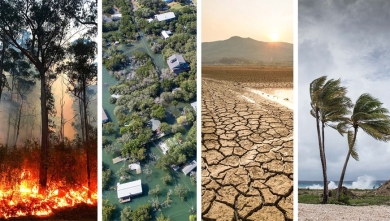
Pesticides and herbicides made from fossil fuels that are freely available to unwitting consumers poison our land, our bodies and life all around.
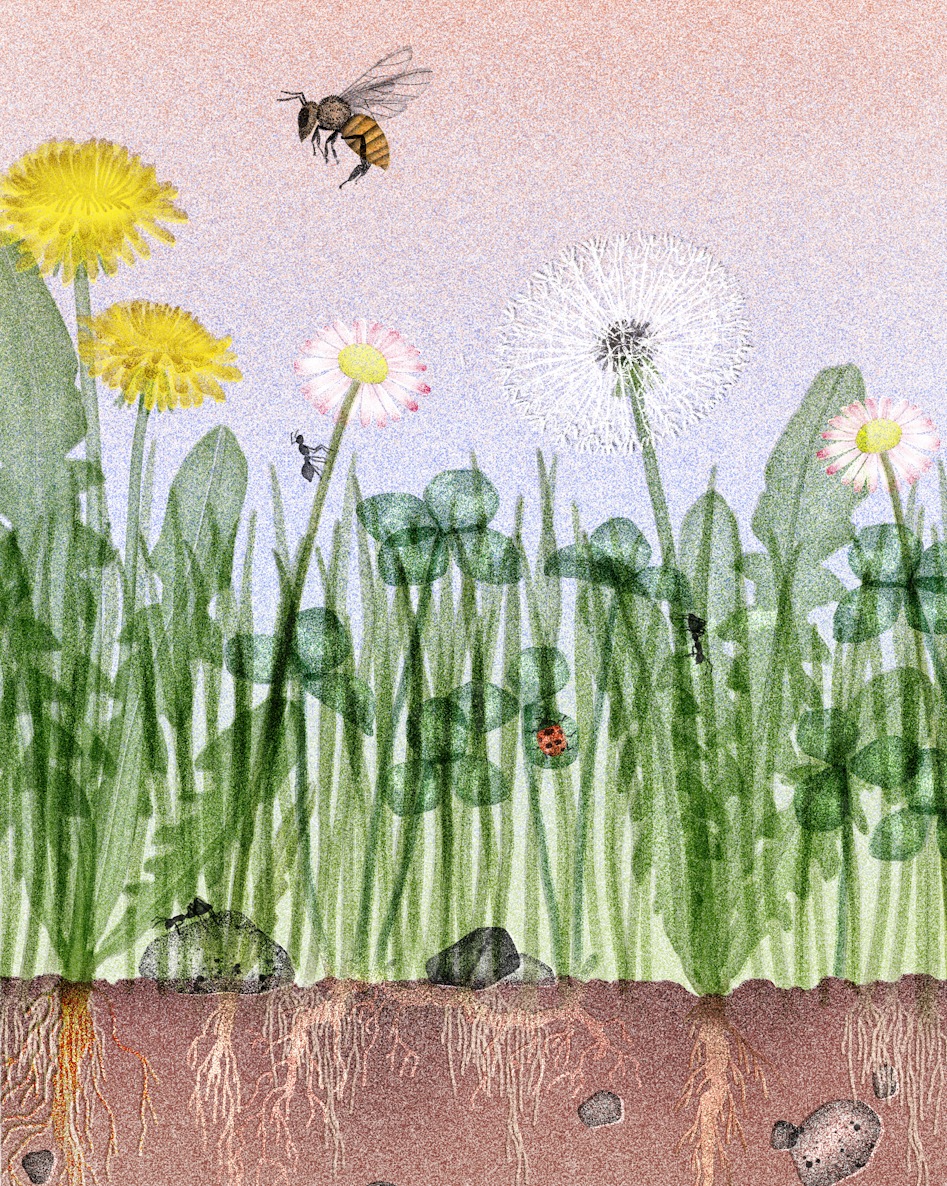
When are you gonna get rid of those weeds, my father would ask every time he visited my Vermont lawn. Splotched with purple thyme, yellow dandelions and white clovers, the lawn attracted honeybees and, later in the season, fireflies. He and I saw the same plants, but we had learned to see differently. Where my father saw interlopers, I saw residents.
For most of my childhood, my father was at war on his quarter-acre plot, my childhood backyard. In some of my most vivid memories, he struggles with the lawnmower, sweat beading on his arm hair. He curses the crabgrass, he drenches dandelions and clovers with chemicals from white spray bottles he got at the hardware store down the street. It was an endless battle.
My father was a Vietnam veteran and a lifelong Republican. He liked to say that women belong in the kitchen. I had become an environmental studies professor, a member of the East Coast liberal elite, a daughter he was ashamed to introduce to his friends at the Post.
He died a few years ago of multiple myeloma, a brutal cancer that riddled his bones with holes. Until the end, he was convinced that being exposed to Agent Orange in Vietnam had caused the disease. He had lived half a century longer than many of the young men he’d served with, and he felt ashamed, I think, of the extra time.
In the weeks after his death, I looked up the logbooks of his aircraft carrier, hoping to piece together whether he would have been exposed to Agent Orange in Vietnam. I later realized he’d been exposed to it in our backyard.
“Our global biodiversity crisis, a crisis of being, is at its core a crisis of seeing.”
The Origin Of Biocides
My father saw two things in lawns: grass and not grass. Botanists have labeled this “plant blindness”; as fewer people farm or learn botany in school, fewer people can identify plants or even notice them. Society has come to see plants as the backdrop, the setting, rather than the actors. But plants are alchemists, really, converting sunlight, water and carbon dioxide into sugar and oxygen, the energy and breath that constitute and sustain life on Earth. They are dazzlingly diverse, with some 2,800 species in Vermont and more than 350,000 worldwide.
Most of these species go unnoticed, as does their decline. This is true across the tree of life, but it is especially true with plants. The International Union for Conservation of Nature estimates that 44,000 species are currently threatened with extinction, including 34% of coniferous plants. To date, humans have nearly halved the total number of trees on Earth. Meanwhile, as species struggle, more than 40 million acres of the United States are planted as lawns, an area the size of Washington state and three times larger than that of any irrigated crop.
Our global biodiversity crisis, a crisis of being, is at its core a crisis of seeing. As species disappear unseen, a direct driver of this crisis goes unseen, too. Biocides are poisons designed to destroy biodiversity. Biocidal compounds are largely invisible — literally, in that many are transparent compounds, and metaphorically, in that petrochemical companies have successfully shielded biocides from public scrutiny for decades.
But biocides are everywhere we look, from the Equator to the Arctic. These poisons are outside of our bodies and inside our bodies. They are poisons targeting entire taxa of life: herbicides, rodenticides, fungicides, bactericides, insecticides, algicides, molluscicides, miticides, piscicides, slimicides, avicides. They are poisons with brand names like Roundup (a herbicide made from glyphosate, which was patented by Monsanto in 1971) and chemical names like diethyl 2-dimethoxyphosphinothioylsulfanylbutanedioate (an insecticide patented by American Cyanamid in 1951).
Contrary to popular belief, biocides were not developed to solve human problems like hunger and disease. Rather, biocides emerged during a crisis of agricultural overproduction, not underproduction, and producers of nonfood crops like cotton have always been some of biocides’ biggest users. Starting in the late 1800s, mining companies realized they could sell farmers and homeowners the vast amounts of toxic waste their work produced. They would profit doubly: from their primary products and then from their poisonous “byproducts.” Biocide supply, in other words, preceded demand.
The first generation of biocides were made from low-value metals like arsenic, copper and lead, the discards of mining. Marketed as insect killers, these chemicals were disastrous for life. In a recent essay titled “Rings of Fire,” environmental historian Jayson Maurice Porter described how white supremacists used arsenical biocides to maintain the political economy of cotton production in the post-emancipation South, poisoning Black farmers. Eventually, arsenical biocides were so heavily used on crops across the United States that forensic toxicologists had trouble distinguishing intentional murder by arsenic from exposures in daily life.
“Biocides are everywhere we look, from the Equator to the Arctic. These poisons are outside of our bodies and inside our bodies.”
In the 20th century, metal-based poisons were largely replaced by “organic” biocides: biocides that contain carbon atoms. After World War I — “the chemists’ war” — companies like Dow, BASF, DuPont and Monsanto raced to repurpose waste produced by the vast manufacturing of fuel and weapons. Their goal was to develop new ways to combine coal- and oil-derived carbon with other elements to produce marketable compounds.
Coal and oil are the buried remains of dead plants and animals, complex mixtures of carbon-based molecules, each with its own terroir. Refineries separate out “purified” fuels from these mixtures. They process raw coal, for example, into coke (largely for steel manufacturing) or coal gas (for lighting and heating) and leftover “coal tar,” a complex mixture of roughly 10,000 chemicals, most of them rings of carbon like phenol and benzene.
If phenol and benzene sound familiar, it’s because they’re the building blocks of our modern world: In the hands of industrial chemists, benzenes become plastics like polystyrene and nylon, drugs like ibuprofen and sedative “benzos,” dyes like magenta and rosaniline, and cosmetics like hydroquinone, a toxic “skin lightener” marketed to women of color. Phenol becomes aspirin, artificial vanilla and industrial paint strippers. Dow first sold dinitrophenol, a waste generated when synthesizing the explosive trinitrophenol, as a diet pill. Later they sold it as a herbicide.
“Nature has filled the tar-barrel with a lavish hand,” Victor Robinson, a physician and journalist, wrote in 1937, “and it has brought color and comfort to mankind. It is the philosopher’s egg, the elixir of life of the modern alchemist. … The rejected nuisance, the despised by-product of the past, is nature’s own laboratory, whose magic alembic distills fluids and vapors and scales and crystals for the alleviation of suffering.”
From the tar barrel, this so-called elixir of life, chemists also sought the makings of suffering. Chemicals known to kill humans held clues to killing plants and animals, and chemicals that killed plants and animals held clues to killing people. Hydrogen cyanide, for instance, first used to fumigate citrus trees in California in 1886, was used by the Nazis to murder more than a million people in gas chambers at concentration camps. The search for carbon-based insecticides at I.G. Farben led to the synthesis of nerve agents including sarin and tabun, the most toxic and rapidly acting chemical weapons. In exploring the possibility of destroying Japanese and German food crops from the air during World War II, the British and American militaries spurred the development of the synthetic herbicides we spray in our backyards.
Manufacturers and consumers alike presumed that carbon-based biocides were safer than arsenic, lead and copper-based biocides, which were known to be acutely toxic not only to insects and microbes but to humans too. In publicity stunts, chemical marketers drank vials of DDT (dichlorodiphenyltrichloroethane, an insecticide patented by Geigy in 1940) and 2,4-D (2,4-dichlorophenoxyacetic acid, a household herbicide and a component of Agent Orange manufactured by many companies, including Dow and DuPont, beginning in 1945). And indeed, these compounds are certainly not acutely toxic like arsenic. Modern organic chemistry, it seemed, had replaced highly poisonous poisons with less poisonous ones.
“With biocides, we have fundamentally reshaped life on Earth.”
These publicity stunts were at first seductive and persuasive; a teaspoon of DDT might not kill a person, whereas a teaspoon of arsenic certainly will. Consequently, the biological crisis that DDT wrought took years to reveal itself. As is now well known, DDT persists in the environment for decades and accumulates in animals at the top of the food chain. DDT thinned the eggshells of bald eagles, brown pelicans and other birds, leading mothers to crush their progeny while trying to incubate their eggs. Recent studies have shown that DDT is also a hormone mimicker, disrupting the reproductive systems of many species, including humans. In the United States, more than 1.35 billion pounds of DDT was sprayed before the federal government banned its use in agriculture (but not mosquito control or export) in 1972.
DDT is one of seemingly countless examples of persistent organic pollutants that were designed to endure. Others include PFAS (used in firefighting foam, nonstick cookware and waterproof clothing) and PCBs (used in electrical equipment). Stability, the very quality that made these compounds valuable products, also makes them environmental hazards. “For the first time in history, virtually every human being is subjected to contact with dangerous chemicals from birth to death,” biologist and writer Rachel Carson wrote in “Silent Spring” in 1962. “In the less than two decades of their use, DDT and other synthetic pesticides have been thoroughly distributed over all but a few corners of the world.”
Since the publication of Carson’s famous book, the world has endured six more decades of relentless poisoning.
The national restrictions on DDT that followed the publication of “Silent Spring” are celebrated as an environmental success story, but limiting DDT did little to protect people or other species. Petrochemical companies simply developed and marketed new biocides, some much more toxic than DDT. Carson foresaw this dilemma, noting that nearly 500 new chemicals per year came into use in the United States in “an endless stream.” Today, more than 80,000 chemicals are registered for use in the country — a list that grows by about seven new chemicals per day. Most of these chemicals haven’t been studied for safety by any government agency; most of them likely never will be.
Biocides are everywhere, not only on croplands. Again, I am brought back to my childhood: the smell of Raid (“Raid kills bugs dead”) and the sight of carpenter ants’ frantic dance and their retreat back into the walls to die privately from an inscrutable list of chemicals — pyrethins, technical piperonyl butoxide, N-octyl bicycloheptene dicarboximide, (butylcarbityl) (6-propylpiperonyl) ether, petroleum distillate and “other related compounds” undisclosed by SC Johnson, “A family company at work for a better world.” Manufacturers add biocides to paint, clothing, toothpaste, soaps, detergents and toys. Pressure-treated lumber is wood with biocides flooded deep into its cellular structure. Biocides are sprayed on food and on playgrounds, into lakes and marshes and pastures and national parks. Fossil fuel-derived biocides have been found in Antarctic snow.
With biocides, we have fundamentally reshaped life on Earth. When we look at trees and birds and insects and lawns, we see the species that have survived 80 years of continuous, uncontrolled biochemical warfare. What, we ought to wonder, is missing?
Creating A World Of Grass
When Carson published “Silent Spring,” more than half of the biocides applied to crops in the United States were insecticides, and this is where environmentalists focused their attention. But by 1970, herbicide use eclipsed insecticide use, and today roughly 75% of the biocides used in U.S. agriculture are herbicides, while only 5% are insecticides. The Food and Agriculture Organization estimates that worldwide, 1.7 million metric tons of herbicides were used in 2021 in agricultural ecosystems alone, with an unknown amount used in backyards, roadsides, parks, lakes and forests. The value of global biocide exports has increased more than 100-fold since the publication of “Silent Spring,” and herbicides dominate this $41 billion market.
The most broadly used and oldest synthetic herbicide in the world is 2,4-D. Since 1944, 2,4-D has determined which plants survive in farm fields and forests, lakeshores and lawns. 2,4-D is selective: It kills dicots, “broad-leaved” plants like poison ivy and maple trees, while sparing monocots, “narrow-leaved” plants like grasses. It is this power of selective killing — the mechanism of which is still poorly understood — that has made 2,4-D and related herbicides so lucrative. Many commodity crops are grasses, including corn, wheat, rice, oats and sugar cane. Spray 2,4-D on a corn field and it will kill ragweed, goldenrod, thistle and other broad-leaved weeds — but not corn. Spray it on a backyard lawn and it will kill dandelion and bindweed — but not Kentucky bluegrass.
Foresters all over the world use 2,4-D to kill invasive or otherwise unwanted species. Utility companies use it to keep rights-of-way clear. Departments of public works rid roadsides and culverts of brush with 2,4-D. Golf course and sports turf managers use 2,4-D to keep their fields grassy. The U.S. government uses 2,4-D to clear swathes of the Canadian and Mexican borders. 2,4-D is used in pretty much every country in the world today.
In other words, regardless of where in the world you are reading this essay, you are embedded in an ecosystem shaped by 2,4-D and its chemical cousins. Indeed, 2,4-D is very likely inside you; one in three Americans has 2,4-D in their urine. The herbicide has been found in streams and groundwater in both rural and urban areas, reflecting its use across ecosystem types. In testing drinking water for biocides in 2013, the U.S.D.A. detected 2,4-D in 98% of the samples. Another study found that more than 40% of water samples taken from the Great Barrier Reef contained 2,4-D and its degradation products. Scientists recently found 97 different biocides, including 2,4-D, in bees’ pollen stores in a survey of beehives across eight European countries, where chemical regulations are comparatively strict.
Despite the ubiquity of 2,4-D, scientists have barely studied its human health impacts, as is the case for most synthetic chemicals. The World Health Organization classifies 2,4-D as a possible carcinogen and immunosuppressant, noting a lack of research. The chemical is a synthetic mimic of a plant growth hormone, indole acetic acid, that happens to also be a human metabolite, involved in our serotonin and melatonin pathways, which regulate emotions, digestion and sleep.
Are 2,4-D and other hormonal herbicides reshaping our moods, our waking and our sleeping, our desires? We have no idea, because nobody has asked.
We tend to think of herbicides as safer than insecticides and rodenticides because plants are less like us than insects and rodents. And yet amino acids, and many hormones, are shared between plants and animals. The first human birth control pill was derived from yam plants; scientists used hormones in human urine to increase plant growth. And psychotropic plants like cannabis should give us pause when we imagine a distance between our bodily systems and those of the plant kingdom.
What we can say with certainty is that with 2,4-D, we have created a world of grass. Widespread and long-term use of this herbicide has transformed agricultural, residential and roadside ecosystems into grass-scapes, and these grass-scapes support many fewer species than the habitats they replaced. Ecologists have long shown that diversity begets diversity: When there are more plant species, there are more insect and animal species because there are more types of food and shelter. Moreover, turfgrasses are regularly mown down, denying pollinators and other animals food and habitat. And so, by creating a world of grass, we decreased biodiversity across the entire Earth.
“Since 1944, 2,4-D has determined which plants survive in farm fields and forests, lakeshores and lawns.”
Weeds Become A Problem
The story of how 2,4-D arrived in our lives is a story of mass death in the pursuit of life.
Scientists first synthesized and patented 2,4-D as a plant growth hormone, not as a herbicide. In the early decades of the 20th century, biologists considered hormones, rather than genes, to be the submicroscopic entities that controlled organismal growth and development, communication between organs within the body and other fundamental processes of life. Astonishingly, distantly related species seemed to share the same hormones. In 1911, for instance, a German scientist found that tadpoles fed horse thyroid tissue metamorphosed into adults many weeks faster than tadpoles fed other diets. Hormones, it seemed, might hold the secret of life itself.
In 1938, a plant physiologist named John Mitchell, who had grown up traveling on horseback to a two-room schoolhouse in rural Idaho, took a job at a U.S. Department of Agriculture research center north of Washington, D.C. There he sought cheap, plentiful sources of naturally occurring hormones, including horse and human urine, and tried to stimulate rooting in beans and marigolds. In a 1940 journal article, he reported on European scientists who had found that tomato plants treated with animal hormones produced 150% more fruit. He also noted that a number of new coal-tar derivatives seemed to induce growth responses in plants, including phenoxy acids.
At higher concentrations, some phenoxy acids also affected the morphology of developing plant parts. In radio broadcasts, Mitchell asked listeners: What if commercial hormones could be used to stop the cherry trees on the national mall from dropping their flowers? What if they could speed up the harvest of apples and peaches? What if they could keep tomatoes on the vine until they were a lush red or produce pineapples any month of the year?
Mitchell’s work took a turn when, on October 1, 1941, the U.S. Secretary of War assembled a top-secret committee to investigate the prospects of biological warfare. Mitchell’s former Ph.D. advisor and collaborator, Ezra Kraus, joined the committee, and barely a week after the Japanese attack on Pearl Harbor, he wrote a proposal that argued for plant hormones to be used both to increase domestic crop production and to destroy enemy vegetation. He and his colleagues had recently observed that at high concentrations, certain hormones called auxins seemed to inhibit plant growth. The development of “growth destroying” substances — what we now call herbicides — could provide a “comparatively simple means” of destroying staple food crops, Kraus argued, and he speculated that herbicides could be used to kill trees and reveal concealed military depots.
Starting in 1944, the Chemical Warfare Service tested more than 1,000 synthetic chemicals for their potency as both plant growth stimulants and as herbicides. Kraus began testing synthetic auxins for herbicidal activity in his Chicago greenhouses, and Mitchell sprayed patches of lawn with 2,4-D acquired from the American Paint Company, noting that it killed 95% of dandelions with a single application, but none of the grass. That same summer, a former colleague of Mitchell’s found that 2,4-D and the closely related auxinic herbicide 2,4,5-T were incredibly effective at killing poison ivy, wild raspberry, milkweed and other broadleaved species. His work was sponsored by Sherwin-Williams and Dow Chemical Company.
In experiment after experiment, 2,4-D killed broadleaved plants while sparing grasses. The reason was unknown — it still is. But that didn’t matter to companies with the waste chemicals needed to synthesize 2,4-D readily on hand. At the 50th anniversary celebration of 2,4-D, a former Dow employee recounted: “It would be impossible to count the millions and millions of pounds of chlorine, phenol, caustic soda and other commodity chemicals that this product consumes for Dow per year. It has been a perfect fit. We have taken a lot of simple chemistry and upgraded it.”
“The J.T. Baker Chemical Company worked to sell dairy farmers on 2,4-D by arguing that plants like wild garlic and ragweed imbued milk with ‘weedy flavors.'”
With ample supplies of chlorine and phenol, a waste product of fossil fuel refining, Dow and other chemical companies then faced the task of selling farmers, homeowners and land managers on the need to kill broadleaved plants. This included many Dust Bowl farmers who, for years, had been told that the degradation of their land was their fault precisely because they had removed too many broadleaved plants. It was not, in other words, a ready-made market. The author of a 1947 article in Agricultural Chemicals wondered, “Are weeds merely an annoying nuisance or are they something that farmers will pay money to combat?” Tellingly, the first venue in which Mitchell published his 2,4-D results was not a scientific or agricultural journal but a golf magazine.
Early advertisements for 2,4-D weed killer portrayed hand-pulling and hoeing as outdated technologies soon to be replaced by chemical tools. In 1947, Dow released a 20-minute promotional film, “Death to Weeds.” The film opened with an imagined class-action lawsuit pitting the plaintiffs, farmers and homeowners, against the defendants, weeds. Weeds, the narrator explained, robbed crops of water and food, and they harbored insects and plant diseases. Charging that “weeds are our common enemy,” the narrator argued that they inflicted “never-ending warfare against the American farmer.” But Dow’s “arsenal of chemical warfare” was capable of bringing these enemies to justice. The film closed by declaring weeds “guilty as charged” and deserving the death sentence. Biocide, it argued, was justice.
Companies sought their own niches in the synthetic herbicide market. While Dow initially focused on growers of corn, wheat and sugarcane, the J.T. Baker Chemical Company worked to sell dairy farmers on 2,4-D by arguing that plants like wild garlic and ragweed imbued milk with “weedy flavors” and that killing these species with 2,4-D would improve profits. Companies’ 2,4-D products diversified as they insinuated that different formulations were needed for croplands versus pastures, small-scale operations versus large ones, fog sprayers versus airplane sprayers. Over the years, Dow has marketed 2,4-D formulations under a variety of names, including “2-4 Dow Weed Killer,” “Esteron 44,” “Dow Contact Weed Killer,” “Formula 40,” “Weed Killer 4D,” “Scorpion III” and even “Justice.”
In the decade after World War II, hormonal herbicides spread far beyond U.S. borders, first through war and then through marketing. The United States and Britain explored the possibility of herbicidal warfare in field trials of the most promising mixtures in India, Australia, Tanzania, Kenya and Malaya. In 1945, the British Joint Technical Warfare Committee noted that herbicides could be used “for the destruction of food supplies of dissident tribes” as well as “a form of sanction against a recalcitrant nation which would be more speedy than blockade and less repugnant than the atomic bomb.” A few years later, the British military became the first to deploy herbicides in war when it sprayed forests with 2,4-D and 2,4,5-T in an attempt to deprive the Malayan National Liberation Army of cover and food and thus protect British rubber interests.
In 1962, President John F. Kennedy authorized Operation Ranch Hand, the codename for the U.S. Air Force’s herbicide program in Vietnam, which was designed to improve visibility for American soldiers. (The Ranch Hand motto, “Only you can prevent a forest,” riffed on the words of the U.S. Forest Service mascot Smokey the Bear, “Only you can prevent a forest fire.”) Between 1962 and 1971, the U.S. military sprayed more than 16 million gallons of auxinic herbicides in Vietnam, eastern Laos and Cambodia. Operation Ranch Hand damaged or destroyed more than 5 million acres of forests and croplands, an area roughly the size of New Jersey.
From 1940 to 1950, the U.S. market for herbicides increased from approximately $1.5 million to $15 million. Most of this growth was due to chemical companies’ wildly successful marketing of 2,4-D. Since then, the herbicide market has grown ceaselessly. Between 2005 and 2016, herbicide use in China increased more than six-fold. Today, herbicides generate billions of dollars of revenue each year for petrochemical companies.
Invisible Loss
Rachel Carson described a world without birdsong and asked her readers to hear the silence of death, of birds killed by two decades of heedless biocide use. Today, when we look outside, we see a world shaped by eight decades of heedless biocide use. We see grass. We do not see what is missing, what we have killed.
The world that would be if synthetic herbicides had not been so successfully marketed is invisible.
Herbicides made possible the mechanization of agriculture and the loss of farming jobs. Chemical weed control changed everything about agriculture: choice of crop and variety, seedbed preparation, row spacing, harvesting practices, erosion control methods, fallowing practices, disease and insect control practices, land clearing and maintenance of drainage ditches, irrigation canals and roadsides.
Shortly after 2,4-D hit the market, an article in an Iowa newspaper speculated that chemical weed killers might “revolutionize farming by eliminating the need for the hoe and the cultivator. The farmer of the future might be able to do all his weeding with a spray gun and chemicals bought at the drug store.” The prediction came true. And because 2,4-D did not kill grassy weeds, like quack grass and foxtail, by the 1970s, farmers were compelled to buy new, more expensive herbicides. More recently, in response to increasing herbicide resistance in agricultural weeds, Corteva (spun off from DowDuPont) released the “Enlist Weed Control System,” a proprietary mixture of 2,4-D and glyphosate to be used on commodity crop seeds genetically engineered to tolerate the herbicides. In order to extend the profitability of biocides, chemical companies are reengineering plants.
Today, scientists and activists are working to envision food production beyond biocides, production that values the health of farmers, workers and environments. But such visionary work still fails to look everywhere we need to look: forests, wetlands, pastures, highway verges, football fields. Non-agricultural uses account for one third of total herbicide sales in the United States. According to industry estimates, every year, 2,4-D is sprayed on millions of acres of pastures, natural areas and lawns.
“Today, when we look outside, we see a world shaped by eight decades of heedless biocide use. We see grass. We do not see what is missing, what we have killed.”
The biodiversity crisis demands an aesthetic revolution. Petrochemical companies convinced us that grass looks good. Now it is time to envision public and private spaces that are more alive than grass.
This work is already being done at small scales. Researchers at the Cornell Botanic Gardens, for instance, are working to find low-growing native plants, including broadleaved species, as alternatives to the Kentucky bluegrass, fescues and perennial ryegrass that have become the mainstays of conventional lawns. London, Berlin, Buenos Aires and many other cities have encouraged pollinator gardens and green roofs through tax incentives and public projects. The designers of the High Line in Manhattan, reimagining an abandoned freight railway, planted more than 500 species — an incredible number compared to a typical landscaping project — creating a public space richer and more engaging than the monotony of the National Mall.
But we cannot solve the biodiversity crisis at the level of home or even city. To try to do so is to implicate individual consumers rather than chemical companies and policymakers. Why should biocides be sold to unlicensed users at all? Researchers estimate that around 385 million people per year are unintentionally acutely poisoned by biocides, leading to 11,000 deaths. Pesticide self-poisonings also account for at least one in seven suicides globally. These are only the immediate deaths, not those from cancers and other conditions caused by exposure; these are only the human deaths.
And while climate change is one cause of biodiversity loss, we also can’t solve the biodiversity crisis with decarbonization alone. As governments restrict the burning of coal, crude oil and natural gas for fuel, petrochemical companies will easily shift to produce more plastics and more biocides. These distinct petrochemical uses — fossil fuels, plastics and biocides — profit petrochemical companies at the expense of life on Earth. We need to limit the extraction and release of carbon-containing molecules systemically. Policy myopically focused on greenhouse gas reduction runs the risk of increasing biocide production.
The specific chemical makeup of these poisons doesn’t matter much. DDT was one among many toxic biocides. 2,4-D was the most heavily applied herbicide in the United States from 1948 until the early 2000s when it was overtaken by glyphosate, the main ingredient in Roundup. Today, the 2,4-D market is again expanding because weeds have developed resistance to Roundup and because of legal challenges to another widely used herbicide. Other synthetic biocides will come in an unending cycle if the war on weeds is allowed to continue. Fossil fuels are the buried remains of dead plants and animals, and biocides are death remade into death.
“We can’t solve the biodiversity crisis with decarbonization alone.”
A child said, What is the grass? fetching it to me with full hands;
How could I answer the child?
In a different age, around a century before herbicides existed, Walt Whitman saw grass as a wonder. In its blades, he saw the individual inextricable from the collective; he saw death become life again.
My father saw grass and not grass. When she steps outside, I want my daughter to see dozens or hundreds of species — to see life again.
BY LAURA J. MARTIN - NoemaMag