Almost 20 years after his famous book, The Singularity is Near – in which he predicted a technological singularity by 2045 – world-renowned futurist and inventor Ray Kurzweil is back with a sequel: The Singularity is Nearer. We are giving away three copies to our readers.
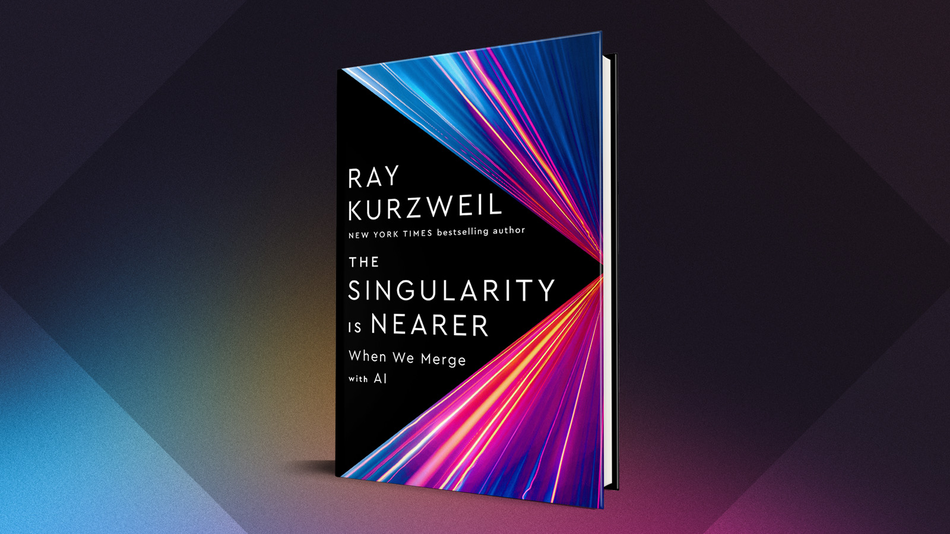
The concept of the singularity – a hypothetical point in time when AI surpasses human intelligence and fundamentally alters civilisation – has captivated both futurists and technologists alike. Ray Kurzweil has been a leading voice in this discussion. One of his seminal works, The Singularity is Near, published in 2005, laid out a roadmap for how exponential technological progress could lead to this transformative event by 2045.
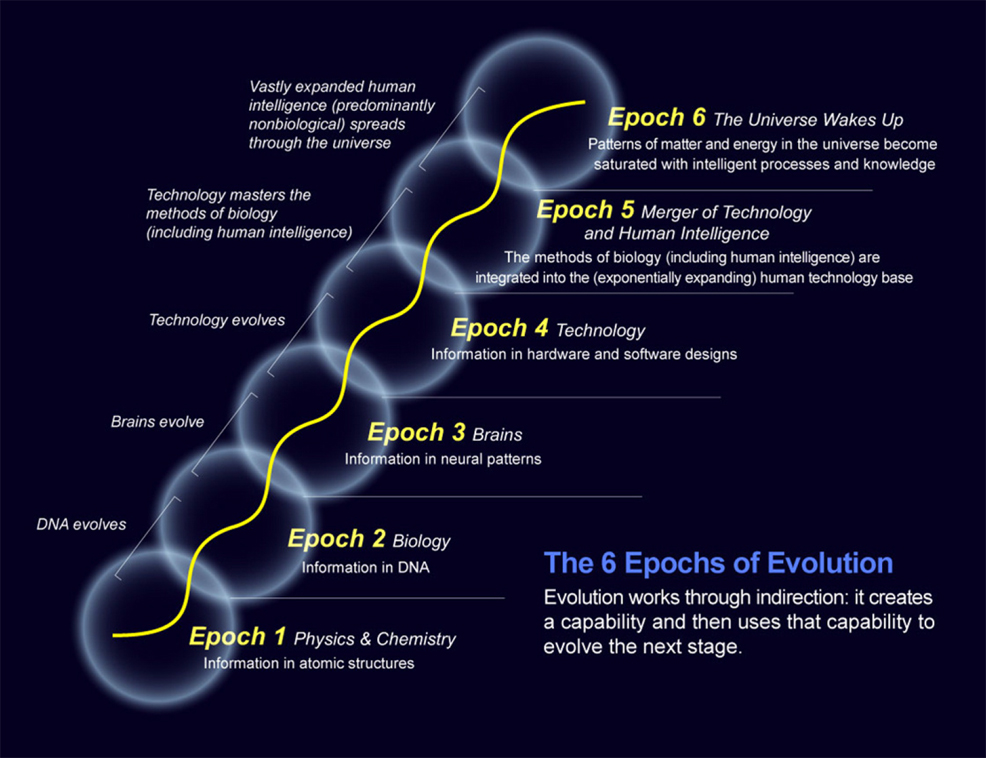
Kurzweil's vision traces back to the origins of the universe itself. After the Big Bang, he explains, information became encoded in atomic structures. A vast period of time went by, during which little or nothing appeared to be happening. But then gradually, a series of new "epochs" emerged – each allowing faster changes and higher levels of complexity than the one before.
The emergence of single-celled life, for example, led to multicellular life. This, in turn, led to the Cambrian explosion, during which the diversity of life increased by orders of magnitude. Mammals later followed, with primates and then humans after that, able to carry much more information in the form of neural patterns. Thus, the chemical epoch of the early universe led to the biological epoch of life, and then a third epoch of brains, which has since been followed by a fourth technological epoch.
This latest epoch, characterised by humans creating tools and knowledge at increasingly rapid rates, began in the Stone Age. It has been particularly noticeable since the Industrial Revolution, with even greater progress occurring in more recent decades, and today's technology developing at an unprecedented pace. Kurzweil argues that we are now on the verge of a fifth epoch, when human intelligence is merged with AI to become exponentially more powerful. This event, known as the singularity, takes its name from the phenomenon believed to occur in black holes. Like how extreme gravity breaks down the laws of physics, technological progress may be difficult or impossible to understand in a post-singularity world, unless you merge with AI.
A sixth and final epoch may be the "waking up" of the universe, when all matter is saturated with intelligence, and even previously "dumb" objects like rocks are turned into computational substrates. Planets and moons throughout our galaxy and beyond would be made sentient, acting as giant computers.
Prior to The Singularity is Near, Kurzweil had already garnered a reputation for accurate predictions. In the 1980s, for example, he foresaw the breakup of the Soviet Union, due in part to the spread of information and communications technology. He also correctly predicted the rise of the Internet in the 1990s, the year when a computer would beat a human chess player, and the rapid completion of the Human Genome Project (made possible by the exponential improvement of DNA sequencing costs).
In his 2005 book, Kurzweil included a range of graphs and trends to support his theory, lending credibility to events with profound implications – such as the emergence of human-level AI, cures for cancer and aging, full-immersion virtual reality, and radical new materials made with nanotechnology (to list just some of his more memorable predictions). The Singularity is Near became an international best-seller, captivating readers around the world and sparking widespread discussions about the future of humanity.
Nearly two decades later, Kurzweil has now returned with a sequel: The Singularity is Nearer. In this new book, Kurzweil reiterates his original prediction of artificial general intelligence (AGI) by 2029. Given recent advances, however, he acknowledges that this date may now be conservative. He further explores the potential for nanobots during the 2030s – not just in medicine but as part of everyday life – envisioning a near future where human and machine intelligence are beginning to merge. This convergence, he argues, will pave the way to a technological singularity by 2045.
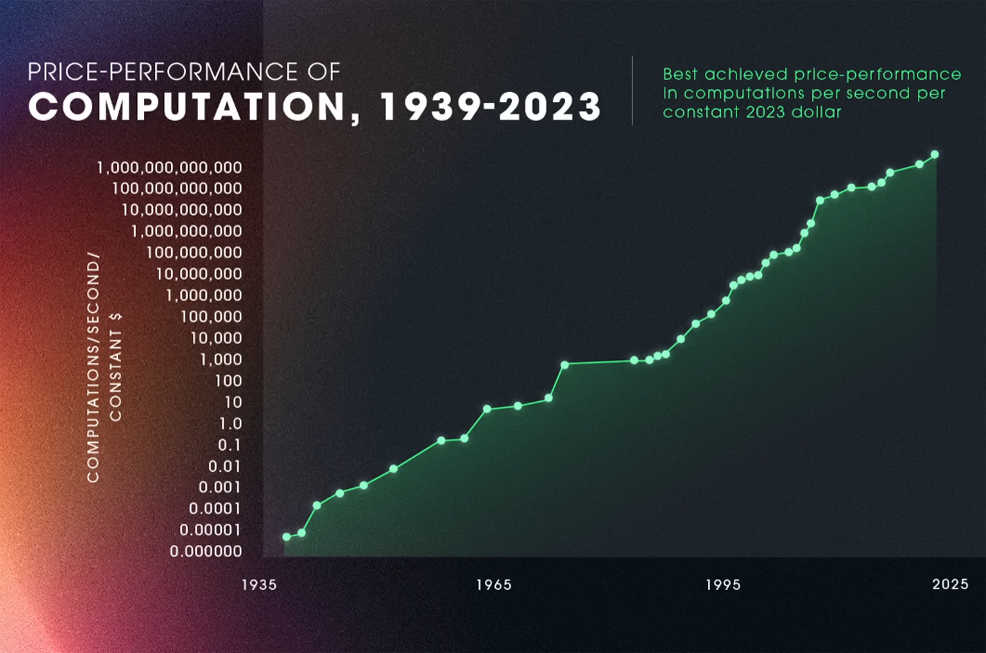
As with his earlier book, this follow-up is rich with data and graphs. Updated with the latest available information, they once again show continuous improvements in everything from computing and genetics to education and crime rates, all gradually enhancing human capabilities and alleviating suffering.
If current trends are maintained, this post-singularity world could enable radical life extension (far beyond the current age limit of 120), the connection of human brains to the cloud (enhancing our intelligence and memories), the solving of the climate crisis – and much, much more.
"It has been almost 20 years since I predicted the Singularity will arrive by 2045 and I am sticking with that prediction," explained Kurzweil in a recent interview with PCMag. The Singularity is the "next step in human evolution," when humans merge with AI to "free ourselves [from] biological limitations."
"Some people find this frightening," he added. "But I think it's going to be beautiful and will expand our consciousness in ways we can barely imagine, like a person who is deaf hearing the most exquisite symphony for the first time."
With concerns growing over the misuse of disruptive technologies, as well as the impacts of technological unemployment, Kurzweil recognises the need for effective governance and social institutions to manage humanity's relationship with AI. These and other risks are covered in The Singularity Is Nearer.
Mustafa Suleyman, CEO of Microsoft AI, and the co-founder of Google DeepMind, commented on the new book: "Few people have shaped how the world thinks about AI like Ray Kurzweil. Now, with The Singularity Is Nearer, he has written an updated, expansive, and hopeful guide to a fast-approaching future that will once again set the terms of debate. Grounded in decades of meticulous research, and written with impressive clarity across an immense canvas, it's essential reading for anyone wanting to understand our exponential times."
"Ray Kurzweil's The Singularity is Nearer is to information technology what Charles Darwin's Origin of the Species was to life science," said Martine Rothblatt, PhD, founder of biotechnology company United Therapeutics.
The hardback and eBook editions of The Singularity Is Nearer are now available to purchase from most major bookstores. Or, if you prefer, you can enter our competition below for a chance to win a copy!
By FutureTimeLine