With China staring down the barrel of a Japan-style “lost decade” of deflation and stagnation, the central government has finally taken action, announcing its largest stimulus package since the COVID-19 pandemic. But, while this may buy China time, it will not deliver lasting prosperity.
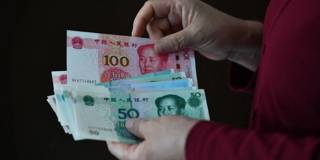
When it comes to economic slowdowns, things often get worse before they get better. This is being borne out in China, following the government’s introduction in late September of its biggest stimulus package since the COVID-19 pandemic.
The government’s announcement took many by surprise, but abrupt policy shifts are nothing new for China. The regulatory crackdown on the internet sector in 2021, the end of the zero-COVID policy in 2022, and the changes to fertility rules since 2014 were similarly sharp reversals.
In my recent book, High Wire: How China Regulates Big Tech and Governs Its Economy, I explain that Chinese policymaking has three defining features: hierarchy, volatility, and fragility. Sudden and dramatic policy shifts are made possible by China’s centralized decision-making structures, in which policy is dictated from the top down (hierarchy). Policies tend to follow a cyclical pattern, with often-sharp swings between tightening and easing (volatility). And, even when well-intentioned, they often generate unintended consequences, which may take so long to materialize that, by the time the authorities grasp them, reversing course carries high costs (fragility).
China’s delayed response to the looming threat of deflation fits squarely within this pattern. Though the warning signs have been apparent for more than a year, the government was reluctant to take bold steps to jump-start growth, for a few (legitimate) reasons. Most notably, the authorities are acutely aware of the need to shift away from the economy’s traditional reliance on real-estate and infrastructure investment, toward more sustainable sources of growth, like high-tech innovation.
It does not help that China is still grappling with the effects of the massive 2008 stimulus, especially excessive debt accumulation among local governments and state-owned enterprises – a trend that pushed the country to a critical threshold of systemic financial risk a few years ago. In addition, China’s top leadership worries that consumption-driven growth could pave the way for a welfare state, which they viewed as wasteful and misaligned with their long-term vision of China as a self-reliant industrial and technological powerhouse.
So, rather than heed calls for bold stimulus measures, China’s government took only modest steps to stave off economic decline. Predictably, these steps did little to address the deflation threat. Meanwhile, policymakers focused on maintaining fiscal discipline while continuing to invest in production, even though this exacerbated the overcapacity that, in sectors like solar panels and electric vehicles, is fueling trade tensions with the rest of the world.
Now, China is staring down the barrel of a Japan-style “lost decade” of deflation and stagnation. And the longer deflation persists, economists warn, the costlier it will be to reverse. Fortunately, China’s leaders finally seem to be listening: in a dramatic shift, the government has fully mobilized its monetary and fiscal tools to rescue the faltering economy.
This was the right move. A supercharged stimulus effort is exactly what China needs at this point. But it is not without its risks. The stock market responded to the stimulus with a powerful rally, and equities recorded their best week since 2008. With investors expecting the government to roll out more fiscal measures to prop up the economy, speculation is running rampant.
The fear now is that this sudden injection of capital into the economy could create stock-market bubbles, sowing the seeds of the next financial crisis. If this risk materializes, Chinese policymakers will once again face a crisis-management situation that resembles a game of whac-a-mole: as soon as one crisis is quashed, another emerges.
To avoid this outcome, China must take steps to minimize the unintended consequences of its policy interventions, such as creating mechanisms for obtaining real-time, accurate feedback that can guide mid-course corrections before bubbles form and crises erupt. More fundamentally, China must break its habit of hasty and dramatic policy shifts, based on top-down decrees, and return to the approach that served it so well in the past: gradual and incremental reforms, based on decentralized policy experimentation.
Such experimentation was a hallmark of the first three decades of China’s market-reform process, when the economy achieved year after year of double-digit GDP growth. By empowering sub-national authorities to leverage local knowledge and test new ideas, the central government ensured that policy innovation flourished. In recent years, however, the central government has increased its reliance on sweeping top-down decision-making, to the economy’s detriment.
Bold stimulus may buy China time, but it won’t deliver lasting prosperity. For that, China must embrace the kind of decentralized governance that powered its rise. This means restoring local governments’ autonomy and encouraging bottom-up initiatives through which authorities test solutions tailored to their regions’ circumstances. The question is whether Beijing is prepared to cede any control in its quest to secure greater long-term command over the economy.
By Angela Huyue Zhang - Project-Syndicate