Isabella Weber, who linked corporate profits to inflation, shares how to prevent food shortages – and price gouging
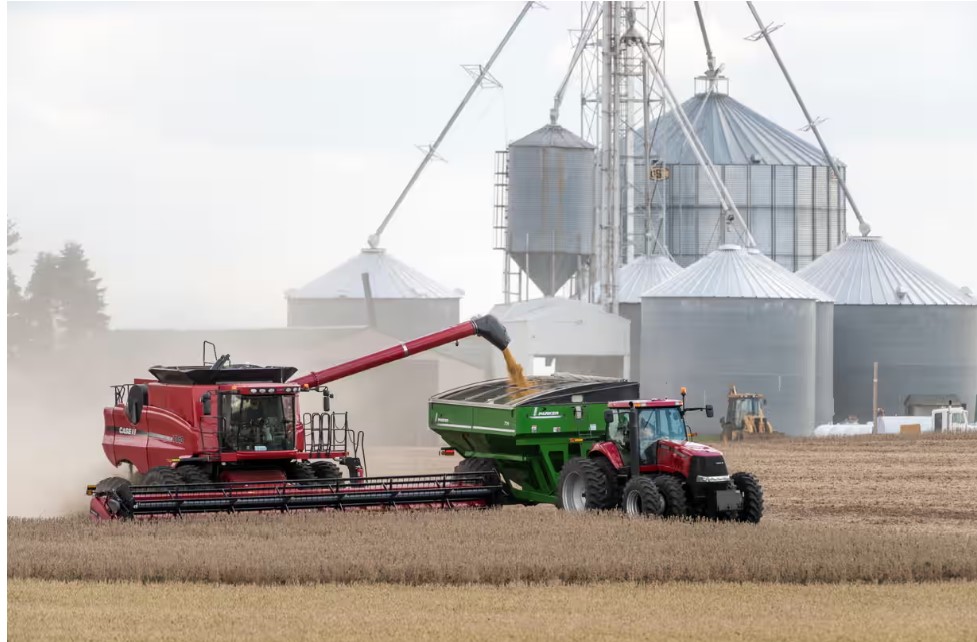
The worst of times for global hunger seem to be the best of times for companies,’ Weber said. Photograph: Joe Mamer Photography/Alamy
Isabella Weber, the economist who ignited controversy with a bold proposal to implement strategic price controls at the peak of inflation and identified corporate profits as a driver of high prices, has proposed a new measure that could prevent food shortages and price gouging in the wake of another disruption of the global supply chains.
Weber’s new paper, published on Thursday, looks at how grain prices spiked in 2022 as Covid snagged supply chains and Russia invaded Ukraine. The price hikes helped to drive record profits for corporations while pushing inflation higher and increasing global hunger. In the paper, Weber and colleagues call for the creation of buffer stocks of grain that could be released during shortages or emergencies to ease price pressures.
Such a system would quell the volatility that is a hallmark of the grain market and keep food prices down, said Weber, the paper’s lead author and an associate professor at the University of Massachusetts.
“Literally the worst of times for global hunger seem to be the best of times for the companies managing the global trade in food staples,” Weber said. “It might seem utopian in the current environment, but there is such clear benefit in terms of economic stability that it’s not as utopian as it seems.”
Weber’s previous work on inflation went viral after the Guardian published her opinion piece. Her views were pilloried by some leading economists and rightwing media but have since gained support from policymakers and other economists.
A new entity proposed by Weber and her co-author, Merle Schulken, would work similarly to how the Biden administration has wielded the Strategic Petroleum Reserve to try to limit price spikes and collapses in the oil market. When demand for oil is strong and prices climb, the government can use its oil reserves to help bring prices down. When demand is weak and prices fall so low that pumping more oil becomes unprofitable, the government buys and stores barrels in its reserve.
In effect, a grain reserve could set a ceiling on prices to protect consumers, while establishing a floor to shield farmers when grain prices collapse.
Though the concept could work for most commodities, Weber focused on grains because they are easy to store and their prices affect other foods, like meat.
More broadly, as ongoing inflation generates political discontent, such a measure could head off upheaval. High food prices have destabilized countries in the global south, leading to migration crises that have fueled the rise of the far right in Europe and the US.
“In the context of fragile democracies being cracked up by the right of far-right parties, having a way to fight inflation and contain cost of living is really important,” Weber said. “There’s a lot of potential – instead of building walls, you prevent higher prices.”
Recent inflation presents a case study in how price shocks in “systemically important” industries like commodities can allow companies downstream to raise prices to protect – or boost – profits without fear that a competitor will undercut them.
That can generate a “seller’s inflation” driven by profits. While the US relies primarily on raising interest rates to control high prices, the strategy does little in the near term to address seller’s inflation.
It also inflicts incredible collateral damage in the form of economic pain largely shouldered by lower- or middle-income classes, and the poorest nations globally.
The paper argues the price shocks for basic goods in large part have their roots in the financialization of the commodity markets. In 2000, the US deregulated commodity markets under the Commodity Futures Modernization Act, a move that has led to unprecedented levels of speculation in the prices of necessities like grains, coffee and metals.
Speculation causes prices to swing wildly even though the prices are often detached from the physical reality of the commodity. While Russia’s 2022 Ukraine invasion led to temporary local threats of physical grain shortages, the global supply of grain always remained well above levels to meet demand in the medium term, the paper notes.
Still, prices for grain and shipping surged, battering the public as grain companies reaped record profits and investors were enriched. Many economists labeled it price gouging, and it highlighted how the economic system was “unprepared for the mega shocks of overlapping emergencies”, the paper states.
Buffer stocks of grain likely would have stabilized the market, limited speculation and stopped prices from soaring. Had the global grain supply actually gotten low enough, the stocks could have been released on to the market.
Already, there are signs that prices are going to swing back the other direction – commodity traders and hedge funds have now put the largest bet in 20 years on a slump in grain prices, the paper states. That could be catastrophic for many farmers.
Weber envisions international cooperation with supplies positioned in strategic locations around the globe ready to be quickly deployed in the event of a supply chain disruption.
The US and western nations have the resources to meet the logistical challenges, and could even partner with private industry for storage, Weber said.
The idea is not all that radical – the United States Department of Agriculture (USDA) already buys food for aid programs to “stabilize prices in agricultural commodity markets by balancing supply and demand”.
The program protects large producers when prices get too low, and the USDA could put in place a similar program to protect consumers when prices get too high, Weber said.
“The US is mainly doing support on the way down to protect producers, but does not do much in a systematic way when prices shoot up,” she said.
China has reserves for grain and other foods, like pork, and has not had a food-inflation problem like the US, Weber noted, but in the US there is virtually no political discussion about what to do to stop future food-price shocks. Grain traders benefit from volatility and may oppose such a proposal, so a coalition that represents people harmed by high prices and high interest rates needs to push for the stocks, Weber said. “What we are trying to do is start a conversation,” said Weber.
By TheGuardian