Don’t Weaponize Global Warming In the New Cold War With China

22 Trần Quốc Toản, Phường Võ Thị Sáu, Quận 3, Tp.HCM
Tiêu điểm
BĐS: Bất động sản dẫn đầu thị trường trái phiếu VH & TG: harari Chiến Tranh Iran Ngày 34 Tiền Tệ : Nợ xấu 2026: Thách thức và giải pháp Tiền Tệ : Buffett Tích Tiền: Dấu Hiệu Kinh Tế CN & MT: Chuyên gia phương Tây thừa nhận: "Chúng ta sai lầm rồi", phải sao chép Trung Quốc ngay thôi kẻo quá muộn CN & MT: Siêu El Nino 2026 có thể mạnh nhất thế kỷ, Trái đất tiến tới mốc nhiệt nguy hiểm mới CN & MT: Gần 1.000.000 nhân viên công nghệ mất việc sau 6 năm vì AI: Cơn lốc sa thải càn quét Silicon Valley, kỷ nguyên 'kỳ lân 50 người' chính thức bắt đầu CN & MT: AI và Thất nghiệp: Thực trạng 2026-2035 BĐS: Bất Động Sản: Gánh Nặng Ngân Hàng BĐS: Dự báo 3 kịch bản cho thị trường bất động sản quý II CN & MT: Điện hạt nhân phục hưng giữa những bất ổn năng lượng toàn cầu CN & MT: Trung tâm năng lượng tích hợp: Bài toán chiến lược của Petrovietnam BĐS: Nhóm DN bất động sản chìm trong thua lỗ, 'trắng' doanh thu quý I CN & MT: Dông lốc, mưa đá còn xuất hiện nhiều và khốc liệt hơn do El Nino Tin tức: Kinh tế Việt Nam 2026: Nỗ lực tăng tốc và vùng nhiễu động Tin tức: Khoảng 109.000 doanh nghiệp đã rút lui khỏi thị trường trong 4 tháng đầu năm CN & MT: Dòng tiền ồ ạt đổ vào năng lượng sạch giữa khủng hoảng Trung Đông BĐS: Doanh nghiệp bất động sản chìm trong thua lỗ SK & Đời Sống: Hơn nửa lao động toàn cầu đang chán việc VH & TG: Thế giới lo cạn khí đốt, TQ đã "tính trước" 20 năm: Lời chỉ đạo của ông Tập Cận Bình và chiến dịch táo bạo Tin tức: Bài phát biểu chính sách đối ngoại Nhật Bản-Việt Nam VH & TG: Nước cờ Trump và ASEAN 2026 Tiền Tệ : Lạm phát cao, đơn hàng giảm Tiền Tệ : VIFC: dòng vốn không chỉ cần nơi đến mà cần nơi để ở lại Thư Giản: Đại Biến Động Thế Kỷ 21: Vận 9 Thư Giản: Con người trần gian và hành trình vũ trụ Thư Giản: [2020s: Một thập kỷ rung động] Thư Giản: Abhigya Anand và dự báo 2026 Thư Giản: Dự đoán Điểm kỳ dị các vị trí q3 SK & Đời Sống: Những dự báo về tương lai con người từ một thế kỷ trước Thư Giản: Gemini đã dự cảm khá rỏ dưới lăng kính của mac ngôn thé giới từ 2050. Nhưng từ 2010 ở... SK & Đời Sống: Phường có mật độ dân số cao nhất Việt Nam, gấp 12 lần Hồng Kông (Trung Quốc), 10 lần Singapore : Trật tự thế giới trước nghịch lý lớn của thời đại Chứng khoán: Đầu tư nội địa giữa bất ổn toàn cầu : Nếu không sửa luật, dự án bất động sản sẽ tắc trong 10 năm tới CN & MT: Chọn hybrid thay vì xe điện: Bước đi đẩy những gã khổng lồ ô tô Nhật Bản đến bờ vực sinh tồn? VH & TG: So sánh phát triển 200 năm trước Tin tức:  SIÊU CẢNG 5 TỶ USD CẦN GIỜ CHỐT NHÀ ĐẦU TƯ – “ÁT CHỦ BÀI” LOGISTICS CỦA VIỆT NAM LỘ DIỆN CN & MT: Giải mã nắng nóng 2026: Nếu siêu El Nino xảy ra, thời tiết Việt Nam chịu ảnh hưởng thế nào? Tin tức: Tăng trưởng hai con số, tăng quy mô giảm số lượng dự án Tin tức: Sức mạnh hãng tàu lớn nhất hành tinh vừa quyết đầu tư vào siêu cảng 128.872 tỷ đồng của Việt Nam: Doanh thu 86 tỷ Euro, nắm 20% năng lực vận tải toàn cầu VH & TG: Cuộc sống về già của thế hệ đầu tiên chọn 'không con cái' CN & MT: Trung Quốc: Chuyển đổi năng lượng toàn cầu then chốt CN & MT: Từ Mặt Đất Đến Sao Hỏa: Tương Lai Tin tức: 'Đừng cố giấu sai lầm cũ bằng cách tạo ra sai lầm mới' Tin tức: Đường Sắt Bắc-Nam: Logistics Tối Ưu Tin tức: Cụm cảng Cái Mép - Cần Giờ 2032 Tin tức: Chỉnh hướng kinh tế Việt Nam 2026 CN & MT: Pin lưu trữ năng lượng và yêu cầu tái cấu trúc hệ thống điện Việt Nam CN & MT: Từ những mái nhà phủ pin mặt trời đến bài toán 136 tỷ USD cho điện VH & TG: Nơi nóng nhất Trái Đất không phải xích đạo CN & MT: Phi hành đoàn Mặt Trăng vượt qua quả cầu lửa 3.000 độ C Tin tức: Đã tìm được nhà đầu tư cho dự án cảng Cần Giờ BĐS: Bất động sản TP.HCM: Thanh khoản "đóng băng" VH & TG: Những nghịch lý giá dầu VH & TG: Dự báo Chiến tranh Iran Quý 2/2026 BĐS: Dòng tiền lớn “vẽ lại bản đồ”, nhà đầu tư bất động sản buộc thay đổi cuộc chơi VH & TG: Cách tiếp cận của bạn về "nước cờ đôi" của ông Trump thực sự là một quan sát bậc thầy... VH & TG: Cuộc chiến Iran có ý nghĩa gì đối với Trung Quốc? CN & MT: 40% diện tích Đồng bằng sông Cửu Long sẽ ngập nếu nước biển dâng một mét CN & MT: 'Cục pin’ khổng lồ đầu tiên của hệ thống điện Việt Nam SK & Đời Sống: Tinh thần thời đại Z Thư Giản: Dự báo Xích Mã Hồng Dương 2026 CN & MT: Chiến lược không gian Mỹ và dự báo Brzezinski Tiền Tệ : Nợ xấu ngân hàng vượt 10 tỷ USD: Không phải BIDV hay VPBank, đây mới là nhà băng có nhiều nợ xấu nhất Tiền Tệ : Mỗi ngày vay hơn 2.600 tỷ đồng: Áp lực và lộ trình trả nợ công của Việt Nam ra sao trong năm 2026? CN & MT: Tương lai Đại dương và Hồi phục Sinh thái Thư Giản: Địa Chính Trị và Dịch Lý: Vận Thế Thư Giản: Bính Ngọ 2026: Điểm Gãy Lịch Sử SK & Đời Sống: Việt Nam đối mặt địa chấn kinh tế SK & Đời Sống: Di dân: Sức khỏe, chất lượng sống, tái định nghĩa BĐS: 3 “ông lớn” chia thị phần bất động sản TP.HCM năm Bính Ngọ: Vinhomes làm siêu dự án ngoại ô, Masterise tiếp tục giữ trung tâm, Sun Group đánh thức vùng ven sông SK & Đời Sống: Bùng nổ các đại đô thị Tiền Tệ : Phân tích hệ thống ngân hàng Việt Nam 2026 SK & Đời Sống: Tái cấu trúc KCN Việt Nam quanh cảng Tiền Tệ : Chân dung người được chọn vào ghế Chủ tịch Fed: 35 tuổi đã vào Hội đồng Thống đốc, nổi tiếng với lập trường cứng rắn về nới lỏng tiền tệ Tiền Tệ : Luật Tiền Mới: Thanh Lọc Hay Sụp Đổ? SK & Đời Sống: Cô đơn: Xu hướng xã hội Việt Nam BĐS: Mặt bằng trung tâm TP.HCM: Thực trạng và dự báo VH & TG: Chiến lược An ninh Quốc gia Mỹ: Răn đe Trung Quốc Chứng khoán: 150 nhà đầu tư toàn cầu đến Việt Nam tìm cơ hội "giải ngân" VH & TG: Nhật Bản cân nhắc vũ khí hạt nhân Chứng khoán: PHẦN 3: THỊ TRƯỜNG THĂNG HOA XUẤT TƯỚNG NHỮNG 'ANH HÙNG' Chứng khoán: VN-Index mất gần 30 điểm Chứng khoán: Mía đường Cao Bằng (CBS) chốt quyền trả cổ tức bằng tiền tỷ lệ 30% Chứng khoán: CHỨNG KHOÁN QUÝ 4.2025 Kì 2 BĐS: Không đánh đổi giá nhà lấy tăng trưởng viển vông! BĐS: Thực trạng phân khúc nhà liền thổ tại TPHCM BĐS: 5 lưu ý khi đầu tư LƯỚT SÓNG bất động sản BĐS: Đất ở ổn định 20 năm, không có khiếu kiện, tranh chấp có được cấp sổ đỏ hay không BĐS: Hơn 32.000 căn nhà ở xã hội gần TP.HCM trong kế hoạch xây dựng năm 2025 của Long An
Bài viết
Don’t Weaponize Global Warming In the New Cold War With China

    The planetary risks of nationalism.

    Let me ask an inconvenient question about an inconvenient truth. If time is an ethical dimension when it comes to curbing climate change before it is too late and tips over into irreversibility, shouldn’t we hasten to pull out all the stops available now to save our livable biosphere? Planetary realism would seem to dictate that lesser considerations of narrowly defined national interest should take a back seat and not impede the rapid transition to renewable energy resources.

    Yet what is happening is that legitimate questions about both geopolitical and economic security risk morphing into fervent nationalisms that would damage the overall prospect of humanity.

    It may make sense for the West to establish protective “small yards with high fences” to keep the most sensitive technologies, such as advanced microchips, that could be used for surveillance and suppression of human rights as well as for a hostile military, out of Chinese hands.

    It may make sense to avoid becoming overdependent on supply chains and imports for critical industries — including, for example, port infrastructure at the heart of global commerce. One Chinese state-owned company alone produces 70% of the world’s cargo cranes, which could conceivably be disrupted in a conflict.

    Even if it is overblown to think that TikTok is any more a nefarious platform for subverting the moldable minds of teenagers than any Western-owned social media, there is a logic to severing the link with a company that is, in the end, subordinate to China’s political leadership.

    But does it make sense to build new barriers that block imports of far more commercially viable and affordable Chinese solar panels at this critical moment for the planet just because a Communist Party regime has managed to realize Adam Smith’s theory of the efficient complementarities of trade better than the capitalist West? Does it make sense to expand small yards with high fences to rooftops, stalling at the presently insufficient capacity of solar power generation instead of urgently promoting the installed capacity necessary to dent global warming?

    China last year generated more energy from renewables than fossil fuels despite its legacy coal plants, installing more new solar capacity domestically than the U.S. has since the first commercial installations of modern panels in the 1970s. Despite tariffs of 25% imposed by the climate-denying Donald Trump when he was president and carried on by the Biden administration, China today makes eight of every 10 solar panels produced worldwide.

    According to the International Energy Agency, as the Financial Times reports, it also dominates the supply chain, “producing 85% of the global supply of solar cells, 88% of solar-grade polysilicon, and 97% of the silicon ingots and wafers that form the core of solar cells.”

    China reached this position over the last two decades through concerted government policies to promote sources of renewable energy and meet climate goals for the home front, stimulating demand with subsidies not unlike those long provided in the U.S. in states like California and now through Biden’s Inflation Reduction Act.

    Growth in China’s domestic demand in turn fostered the extensive articulation of a network of suppliers that provided the platform for exporting production by a maturing industry. The lower cost of capital, energy and labor in China compared to the U.S. or Europe has resulted in a 44% price advantage.

    A chief concern emphasized by human rights organizations in recent years is that the supply chain for polysilicon reaches into the Uighur province of Xinjiang where forced labor has been a practice. Pressure from the West, including a U.S. law passed in 2021 banning imports with elements originating in the Uighur region, has significantly reduced that link. Chinese companies have since set up new supply chains for products sold to the U.S. and Germany that avoid upstream sourcing from Xinjiang. Further, U.S. Customs and Border Protection vigilantly inspects solar imports to block banned panels. That has led to a bottleneck of supply in 2023, which is only now clearing up.

    One other side of the coin has undeniably been the hollowing out of solar panel manufacturing in the West, which is prompting calls for even stiffer tariffs on Chinese imports.

    Yet, today, two-thirds of solar jobs in the U.S. involve installation, while only 13% are in manufacturing. In Europe as well, 84% of jobs are in installation while 7% are in manufacturing.

    Even for those who worry more about the end of the month than the end of the world, it would thus seem an acceptable tradeoff in the name of hastening the energy transition not to further block the export of China’s already built capacity when the West would have to spend many years building up its own manufacturing base and supply chains when time is running out.

    Given this reality, an ethical case can be made that the planetary imperative of collective climate security should win out over a purely nationalist narrative when the complementarity roughly works in a way favorable to all.

    Instead of contemplating the kind of restrictions that might rightly apply to sensitive information technologies, in this case what is called for is a practical “partnership of rivals” that does not weaponize global warming in the new Cold War with China.

    This applies in the same way, but to a different extent, to electric vehicles. Since their manufacturing capacity and scale of employment is well established already in some Western countries, negotiated quotas on market share (as was the case with more fuel-efficient and less expensive Japanese cars), instead of outright bans or high tariffs, would seem the most appropriate policy here.

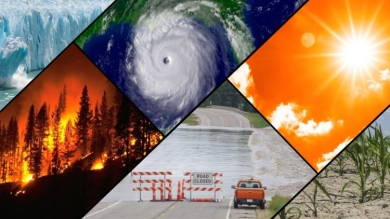
    To invite geopolitical tensions into the climate realm will not only end up destabilizing whole regions already afflicted by extreme weather events and an increasing outflow of refugees. If climate calamity is not mitigated, the national clashes that seem so important today will, in the end, appear meaningless as everyone, no matter who or where they are, will suffer the same fate.

    BY NATHAN GARDELS - NoemaMag

    THỐNG KÊ TRUY CẬP
    • Đang online 41
    • Truy cập tuần 571
    • Truy cập tháng 6931
    • Tổng truy cập 666111